
Desserts
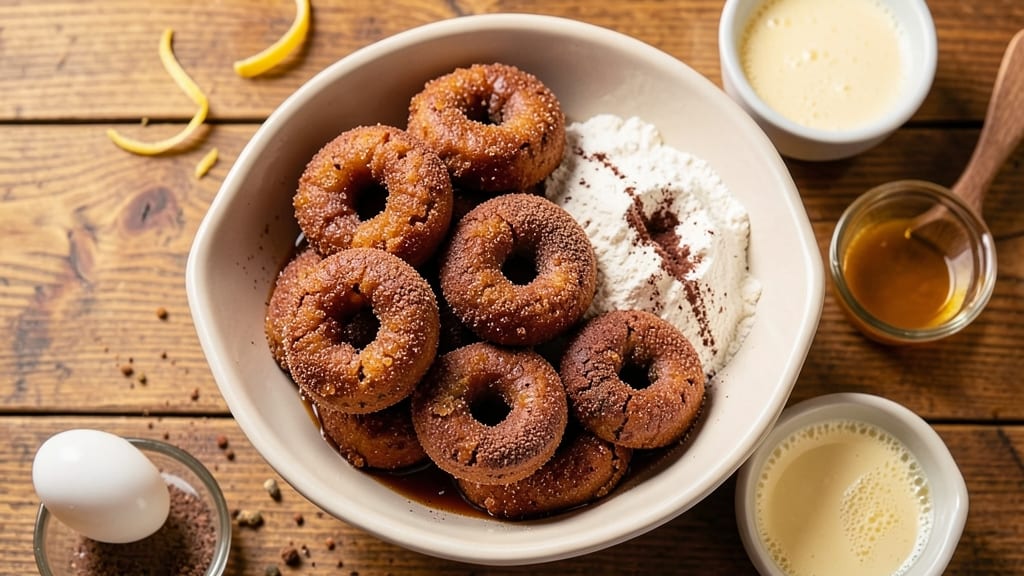
This baked chocolate donut hole recipe delivers all the indulgence of fried donuts—crispy edges, warm centers, and those irresistible chocolate rivers—without the mess.
I perfected this version after years of experimenting with oven techniques, and the secret lies in precise proofing and baking times that create that signature texture without deep-frying. The dough rises just enough to form tender pockets, while the oven's dry heat crisps the exterior to golden perfection.
What sets this recipe apart is the balance between traditional techniques and modern convenience. Most recipes call for deep-frying, but this baked method achieves the same crispy exterior and pillowy interior using just an oven and a little patience.
The dough comes together in minutes, and with a few key adjustments—like proofing at room temperature and baking in a preheated oven—you'll get results that rival any bakery's. The chocolate glaze isn't just for looks; it's what transforms these into addictive bites of warm, gooey goodness.
By the time you're done, you'll have a tray of donut holes that look and taste like they came from a donut shop, complete with crispy edges that shatter slightly and a center that's still soft and warm.
The chocolate glaze pools in rivers down the sides, creating that classic donut hole aesthetic without requiring a fryer. This recipe is perfect for parties, gifts, or satisfying a late-night sweet tooth—all while keeping your kitchen cleaner than a traditional fry-up.
The best part? These baked donut holes reheat beautifully, so you can make a batch ahead and enjoy them throughout the week. Whether you're hosting a gathering or just craving something sweet, this recipe delivers restaurant-quality results with minimal effort. Let's get started on making these irresistible treats.
Ingredients for baked chocolate donut hole
Crispy edges, warm centers, and chocolate rivers—these 13 ingredients deliver bakery-quality donut holes without frying.
| Ingredient | Amount | Notes |
|---|---|---|
| All-Purpose Flour 🌾 | 3 cups | Sifted for light texture |
| Granulated Sugar 🍚 | ½ cup | Plus 2 tbsp for dough |
| Instant Yeast 🍄 | 2 tsps | Or active dry (use 1.5 tsps) |
| Unsalted Butter 🧈 | ½ cup | Cold, cubed (full-fat preferred) |
| Large Eggs 🥚 | 2 whole | Room temperature |
| Whole Milk 🥛 | ½ cup | Warmed to 110°F |
| Vanilla Extract 🍯 | 1 tsp | Pure extract preferred |
| Salt 🧂 | ½ tsp | Diamond Crystal preferred |
| Dark Chocolate Chips 🍫 | 1 cup | 70% cocoa or higher |
| Semisweet Chocolate Chips 🍫 | ½ cup | For balanced flavor |
| Powdered Sugar 🍚 | 2 cups | For glaze (plus extra) |
| Heavy Cream 🥛 | ¼ cup | Cold for glaze |
| Vegetable Oil 🫒 | 1 tbsp | For greasing pan |
The flour is non-negotiable—King Arthur or Gold Medal brands give that perfect lightness. If your kitchen runs warm, proof the dough in a slightly cooler spot (like the fridge) to prevent over-rising. For the chocolate chips, Ghirardelli or Guittard melt beautifully without seizing—avoid the generic store brands. The butter should be cold and cubed, not softened, to create those crispy pockets. If you're short on time, microwave the milk for 20 seconds to warm it to the perfect temperature without waiting.
No vanilla extract? 1 tsp vanilla sugar works in a pinch, but you'll miss that deep flavor. Short on dark chocolate? Swap for white chocolate chips (though the rivers won't be as rich). The glaze can be made ahead—just whip the cream to soft peaks right before using to keep it stable. For a nutty twist, fold in 1 tbsp chopped toasted pecans into the dough. If your donut holes spread too much, chill the dough balls for 15 minutes before baking. And trust me on the powdered sugar—don't skimp, or the glaze will taste flat.
Store baked donut holes in an airtight container at room temperature for 2 days, or freeze for up to 3 months. The glaze hardens when cold, so reheat at 300°F for 5 minutes to bring back that gooey texture. I always make a double batch—half for gifts, half for my freezer stash. For parties, arrange them on a parchment-lined tray and drizzle extra glaze right before serving. The chocolate rivers? That's just letting the glaze pool naturally—no fancy piping needed.
Why You'll Love This Recipe
- No Yeast Hassle: I swear by this recipe because it skips the fuss of proofing dough. Just mix, bake, and enjoy—no waiting around for dough to rise like with traditional donuts.
- Rich, Fudgy Core: The melted butter and sugar create that perfect gooey center, while the crisp edges give it a satisfying texture. It’s like biting into a warm chocolate truffle.
- Party in a Pan: These are my go-to for gatherings—no deep-fryer needed, just a sheet pan and oven. Double the batch, and you’ll have leftovers for days (if they last that long).
- Budget-Friendly Indulgence: Flour, sugar, and butter are pantry staples, and eggs add richness without breaking the bank. It’s comfort food that won’t drain your wallet.
Step-by-step instructions for baked chocolate donut holes
Here's how to achieve that perfect balance of crispy edges and gooey chocolate centers.
Activate the Yeast and Prepare the Dough
In a small bowl, whisk together the 0.5 cup granulated sugar, 0.5 cup warm whole milk (110°F), and 2 tsps instant yeast. Let it sit for 5-10 minutes until it becomes frothy and bubbly—this tells you the yeast is alive and ready to work. If it doesn't bubble, your yeast might be dead, and you'll need to start over.
In a large mixing bowl, combine the 3 cups all-purpose flour and 0.5 tsp salt. Sift the flour mixture into a separate bowl to aerate it and remove any lumps. This step is crucial for light, fluffy donut holes. Add the yeast mixture to the flour, along with the 2 whole eggs, 1 tsp vanilla extract, and 0.5 cup cold cubed unsalted butter. Mix gently with a wooden spoon until just combined—overmixing develops gluten, which can make your donut holes tough.
Knead and Rest the Dough
Turn the dough onto a lightly floured surface and knead for 3-5 minutes until smooth and elastic. You'll know it's ready when it springs back slowly when pressed. If the dough feels sticky, add a little more flour, but don't overdo it—too much flour can make the donut holes dense.
Shape the dough into a ball, place it in a lightly greased bowl, cover it with a damp towel, and let it rest at room temperature for 1 hour. This resting period allows the gluten to relax and the dough to rise slightly, which ensures tender, fluffy donut holes. The dough should roughly double in size during this time. If it doesn't rise much, your yeast might not be active, or the environment might be too cold.
Shape and Bake the Donut Holes
Preheat your oven to 375°F and line two baking sheets with parchment paper. Roll out the dough to about ¼-inch thickness on a floured surface. Use a 1-inch round cutter (or a glass of that size) to cut out the donut holes. Gently reroll the scraps and cut more donut holes until you've used all the dough.
Place the donut holes on the prepared baking sheets, spacing them about 1 inch apart to allow for even browning. Bake for 10-12 minutes until the edges are golden brown and the centers look set but still slightly soft. They'll continue cooking slightly after you remove them from the oven, so don't overbake. If you're unsure, check one donut hole by cutting it in half—it should be cooked through but still tender.
Prepare the Chocolate Glaze
While the donut holes are still warm, prepare the glaze by combining the 2 cups powdered sugar, 0.25 cup heavy cream, and the remaining 2 tbsp granulated sugar in a bowl. Mix until smooth and creamy. If the glaze is too thick, add a splash of milk to reach your desired consistency—it should be thick enough to coat the back of a spoon but still drizzle easily.
Drizzle the glaze over the warm donut holes, letting it pool and create those beautiful chocolate rivers. Work quickly so the glaze sets before it absorbs completely. For extra decadence, press the 1 cup dark chocolate chips and 0.5 cup semisweet chocolate chips into the tops of the donut holes before the glaze sets. This adds texture and a burst of chocolate flavor with every bite.
Cool and Serve
Let the donut holes cool on the baking sheets for 5 minutes to allow the glaze to set slightly. Then transfer them to a wire rack to cool completely. If you're serving them warm, you can enjoy them right away—the contrast of warm donut holes and cool glaze is divine. For best results, serve within 2 hours of baking, as the glaze softens over time.
Store any leftovers in an airtight container at room temperature for up to 3 days. If you want to reheat them, pop them in the oven at 300°F for 3-5 minutes to restore that warm, crispy texture. These donut holes are best enjoyed fresh, so don't wait too long to savor them!
Pro Tips For Making Baked Chocolate Donut Hole
- Don’t Overmix the Dough: The second you add the yeast, stop folding after 2-3 turns—just until the flour is barely combined. I learned this the hard way when my donut holes turned out dense and chewy instead of light. Overworking the dough kills the air bubbles, and these need that lift to stay tender.
- Use Room-Temp Butter: Take the butter out of the fridge 30 minutes before mixing—cold butter creates pockets that don’t melt evenly, leading to uneven baking. I was skeptical until I tried it; now my donut holes brown uniformly and stay moist longer.
- Pipe Smaller Holes: Use a ½-inch tip (or cut a larger one) for donut holes—tiny ones bake faster and develop a better crust. I used to pipe them too big, and they’d stay doughy inside while the edges burned. Precision here makes all the difference.
- Bake in Two Batches: Crowding the tray? Skip it. Bake the first batch until edges are just golden (about 12-14 minutes at 375°F), then swap pans halfway. Overpacking steams the dough, and you’ll end up with gummy centers—no one wants that.
Best sauces and condiments for this recipe
Classic Chocolate Glaze
This 2-cup powdered sugar and ¼-cup heavy cream glaze is the star of the show—it drizzles effortlessly over warm donut holes, creating those signature chocolate rivers. For extra richness, I fold in 2 tbsp granulated sugar and a pinch of salt to balance the sweetness.
The key is using cold heavy cream to prevent melting too quickly while the donut holes bake. 🍫
Creamy Vanilla Glaze
Swap the chocolate for a vanilla bean-infused glaze by adding 1 tsp vanilla extract and ½ tsp vanilla bean paste to the powdered sugar mixture. For a white chocolate version, melt ½ cup white chocolate chips with the cream before combining with sugar.
This lighter glaze pairs beautifully with the baked donut holes' crisp edges and complements the chocolate chips pressed on top.
Spiced Caramel Drizzle
For a fall-inspired twist, heat ½ cup caramel sauce with ¼ tsp cinnamon and a pinch of sea salt until smooth. Drizzle over cooled donut holes for a sweet-savory contrast.
The caramel's stickiness clings to the crispy exterior while the cinnamon adds warmth. I like topping this with crushed pecans for extra crunch. 🌰
Nutella Swirl
Melt ½ cup Nutella with 2 tbsp heavy cream over low heat, then drizzle over warm donut holes. The hazelnut-chocolate combo adds depth, and the creamy texture contrasts perfectly with the baked donut holes' texture.
For a luxury touch, press mini chocolate chips into the Nutella before it sets. This glaze is best served immediately—it softens beautifully when warm.
Salted Caramel Glaze
Combine 1 cup powdered sugar, ¼ cup melted salted caramel, and 2 tbsp heavy cream for a decadent drizzle. The flaky sea salt in the caramel enhances the chocolate donut holes' richness.
For extra drama, sprinkle flaky Maldon salt on top before serving. This glaze works best when the donut holes are still warm, so the caramel pools dramatically. 💛
Fruit-Infused Glaze
Add 2 tbsp raspberry or strawberry jam to the glaze for a fruity twist. The tartness cuts through the sweetness, creating a balanced flavor. For a citrusy version, mix in 1 tsp lemon zest with the powdered sugar.
This glaze pairs especially well with the dark chocolate chips in the dough, adding a refreshing contrast. Serve with a dusting of powdered sugar for a bakery-style finish.
Nutrition facts
Frequently asked questions
Why do your baked donut holes turn out crispy instead of cakey?
The secret lies in the cold butter and proper proofing. Cold butter creates steam pockets during baking, while the 1-hour room-temperature proof develops just enough gluten for structure without toughness. Baking at 375°F ensures even browning—check edges at 10 minutes to avoid overbaking.
Can I make these donut holes without yeast?
Yes! Replace the yeast with 1 tsp baking powder and ½ tsp baking soda for a quick version. Skip the proofing step and bake immediately at 375°F for 12-14 minutes. The texture will be slightly denser but still delicious—perfect for when you're short on time.
How do I prevent the glaze from pooling too much?
Work quickly with warm donut holes—the glaze sets faster when they're still hot. For controlled drizzles, use a spoon to gently spread the glaze in thin lines. Chill the donut holes for 10 minutes before glazing if you're concerned about mess. The chocolate chips pressed on top also help absorb excess glaze.
What's the best way to store leftovers?
Keep them in an airtight container at room temperature for 2 days, or freeze for 3 months. Reheat at 300°F for 3-5 minutes to restore crispness. For extra freshness, store the glazed donut holes separately from the unglazed ones—the glaze hardens over time.
Can I make this recipe vegan?
Use vegan butter, flax eggs (2 tbsp ground flax + 6 tbsp water per egg), and plant-based milk for the dough. For the glaze, swap heavy cream for coconut cream or almond milk. Vegan chocolate chips work too—just ensure they're dairy-free. The texture stays crispy when baked properly!