
Desserts
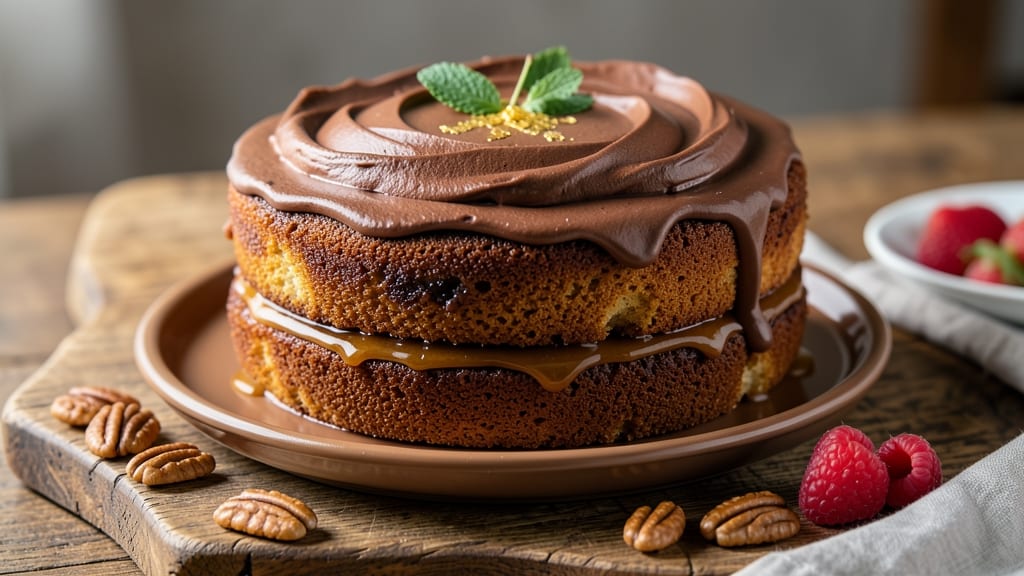
This German chocolate cake recipe delivers the best triple-layered masterpiece you’ll ever bake—rich chocolate cake, pecan-packed ganache, and a crunchy topping that’s impossible to resist. 💛 The secret lies in perfectly balanced layers: a moist, tender cake that holds up to generous frosting without crumbling, and a velvety ganache so thick it clings to every crumb.
I’ve baked this version for holidays and special occasions, and it never fails to impress—even skeptical chocolate lovers ask for seconds.
The cake itself is a foolproof recipe with simple ingredients that come together in minutes, but the magic happens during the chilling stages. Between each layer, we let the cake cool completely before adding frosting—this ensures clean slices and a professional finish.
The ganache? It’s where tradition meets indulgence: a blend of dark chocolate, cream, and toasted pecans that’s thick enough to spread like butter but rich enough to taste like a decadent dessert.
What you’ll end up with is a showstopping cake that’s as beautiful as it is delicious—golden layers peeking through the glossy ganache, toasted pecans adding texture with every bite, and a crunchy topping that adds just the right contrast.
This isn’t your average German chocolate cake; it’s the kind that gets passed around the table, sliced into before the main course even arrives, and requested again at the next gathering.
The best part? This recipe scales perfectly—whether you’re feeding a crowd or treating yourself to a single slice. Let’s get baking.
Ingredients for best ever german chocolate cake recipe and frosting
Twelve simple ingredients transform into a showstopping triple-layered cake with velvety ganache and crunchy pecan topping.
| Ingredient | Amount | Notes |
|---|---|---|
| All-Purpose Flour 🌾 | 3 cups | Sifted for light texture |
| Granulated Sugar 🍚 | 2 ½ cups | Divided for layers |
| Unsalted Butter 🧈 | 1 ½ cups | Room temperature, full-fat |
| Sour Cream 🥛 | 1 cup | Full-fat for moisture |
| Large Eggs 🥚 | 4 whole | Room temperature |
| Vanilla Extract 🌸 | 2 tsp | Pure, high-quality |
| Baking Powder 🍞 | 1 ½ tsp | Diamond Crystal preferred |
| Salt 🧂 | ½ tsp | Fine sea salt |
| Cocoa Powder 🍫 | ½ cup | Dutch-processed, unsweetened |
| Hot Water 💧 | ½ cup | For cocoa mixture |
| Pecans 🌰 | 2 cups | Chopped, toasted |
| Dark Chocolate Bars 🍫 | 12 oz | Semi-sweet, chopped |
| Heavy Whipping Cream 🥛 | 2 cups | Full-fat, cold |
| Butter 🧈 | ½ cup | Room temperature, cubed |
| Corn Syrup 🍯 | ¼ cup | Light, for ganache |
| Powdered Sugar 🍚 | 4 cups | For crunchy topping |
| Melted Butter 🧈 | ½ cup | For topping |
The flour and cocoa powder are your cake’s backbone—King Arthur flour if you can find it, but any all-purpose works. For the chocolate bars, Ghirardelli or Guittard are my go-tos—they melt perfectly every time. Toast your pecans in a dry pan until golden (about 5 minutes)—that nutty aroma is non-negotiable. The butter and eggs need to be room temp, so pull them out 30 minutes before baking. Pro tip: Whip your butter and sugar until it’s pale and fluffy—this is where the cake’s lightness comes from.
No sour cream? Substitute with Greek yogurt at the same amount, but trust me, the full-fat version makes all the difference. Running out of vanilla extract? A splash of vanilla bean paste works in a pinch, but pure extract is worth the splurge. For the ganache, heavy whipping cream is non-negotiable—light cream won’t give you that silky texture. If you’re in a bind, half-and-half works but the ganache will be thinner. The powdered sugar topping? Use confectioners’ sugar (not granulated)—it dissolves smoothly for that perfect crunch. And for the love of cake, don’t skip the chilling stages between layers—patience here ensures clean slices later.
Store the cake in an airtight container between layers of parchment for up to 3 days at room temperature, or freeze the fully assembled cake for 3 months. The ganache keeps beautifully in the fridge for 1 week—just reheat gently before using. For the pecan topping, make it fresh day-of if you can, but prepped ahead it stays crisp for 2 days in an airtight container. This cake is a crowd-pleaser, so make it ahead—it only gets better as the flavors meld overnight.
Why You'll Love This Recipe
- No Mixer Needed: This cake comes together with just a big bowl and a wooden spoon—no stand mixer, no fuss. The sour cream keeps it tender without overworking, so even if you’re mixing by hand, it’ll turn out light and fluffy.
- That Frosting Flavor: Honestly, the peanut butter-chocolate combo is ridiculously good—smooth, rich, and just sweet enough. The buttercream isn’t cloying, and the toasted pecans add a crunch that makes every bite feel like a little treat.
- Birthday or Boredom: Between us, this cake is my go-to for birthdays, potlucks, or when I just need dessert. It’s fancy enough for a celebration but simple enough to make on a Tuesday night when you’re craving something indulgent.
- Leftovers That Last: One pan, two layers, and enough frosting to share. The cake stays moist for days (yes, even on day three), and the frosting? It’s the kind of rich, creamy spread that makes you want to save a slice for tomorrow. Budget-friendly too—just butter, sugar, and a few pantry staples.
Step-by-step instructions for triple-layered German chocolate cake
Here's how to build the ultimate German chocolate cake with rich layers and decadent frosting.
👨🍳 Step 1: Prepare the Cocoa Mixture for Moist Layers
In a small bowl, whisk together the 0.5 cup cocoa powder and 0.5 cup hot water until completely smooth. Let it cool for 2 minutes—this creates the signature chocolatey moisture that sets this cake apart from ordinary chocolate cakes. The mixture should be thick but pourable, like melted chocolate.
I always use Dutch-processed cocoa powder here because it's more flavorful and creates a smoother texture. If you stir too vigorously, you'll create lumps, so whisk just until fully combined. Set this mixture aside while you prepare the dry ingredients.
🥘 Step 2: Combine Dry and Wet Ingredients for Perfect Texture
In a large mixing bowl, sift together the 3 cups all-purpose flour, 1.5 tsp baking powder, and 0.5 tsp salt. This sifting step is crucial—it prevents dense layers by removing lumps and incorporating air. In a separate bowl, beat the 1.5 cups unsalted butter and 2.5 cups granulated sugar on medium speed until light and fluffy, about 3-4 minutes.
Add the 4 whole large eggs one at a time, beating well after each addition. Then stir in the 1 cup sour cream and 2 tsp vanilla extract. Finally, gently fold in the cooled cocoa mixture. The batter should be thick but still pourable—this ensures tender layers rather than a dense cake.
🔥 Step 3: Bake Three Perfect Layers at 350°F
Divide the batter evenly among three greased and floured 9-inch round cake pans. Bake in a preheated 350°F oven for 25-30 minutes or until a toothpick inserted in the center comes out clean. The edges should be golden brown while the centers remain slightly springy—overbaking leads to dry cake.
I like to rotate the pans halfway through baking for even browning. Let the layers cool in the pans for 10 minutes before transferring to a wire rack to cool completely. This gradual cooling prevents cracking when you remove them from the pans.
🍳 Step 4: Make the Pecan-Packed Ganache Frosting
In a medium saucepan, combine the 12 oz chopped dark chocolate bars, 2 cups heavy whipping cream, and 0.25 cup corn syrup. Heat over medium-low until the chocolate melts completely and the mixture reaches 160°F. Remove from heat and stir in the 2 cups chopped toasted pecans—this is where the real magic happens.
Let the ganache cool to 90°F (about 15 minutes) before whipping it with a stand mixer on high speed for 3-4 minutes
Level the cooled cake layers if needed, then place the first layer on a serving plate. Spread a thin layer of the ganache frosting, then add the second and third layers, frosting each one. For the final touch, melt the 0.5 cup melted butter with 4 cups powdered sugar until smooth, then spread over the top layer. Press the remaining 2 cups chopped pecans into the melted butter-sugar mixture while it's still warm. Let the cake chill in the refrigerator for at least 2 hours before slicing—this ensures clean cuts and lets all the flavors meld together perfectly.🥘 Step 5: Assemble and Top with Crunchy Pecan Crust
Pro Tips For Making Best Ever German Chocolate Cake Recipe And Frosting
- Cream Butter Properly: Beat the butter and sugar until it’s pale and fluffy—about 3-4 minutes with an electric mixer. I learned this the hard way: skipping this step means a cake that’s dense instead of light, no matter how much you fold in the sour cream. (Yes, even if you’re impatient like me.)
- Measure Sour Cream Right: Use full-fat sour cream and measure it cold straight from the fridge—no thawing, no warming. Room-temperature sour cream makes the cake sink in the middle, and low-fat versions turn the texture gummy. Trust me, the extra effort makes a real difference in the crumb.
- Don’t Overmix the Batter: Stop folding in the flour as soon as it’s just combined—no streaks, but no grayish dough either. Overmixing develops the gluten, and that’s how you end up with a cake that’s more like a dense loaf than a tender slice. (Your mixer’s going to want to keep going. Resist.)
- Test for Doneness Early: Pull the cake from the oven when the edges are set but the center still jiggles slightly—a toothpick should come out with moist crumbs, not wet batter. German chocolate cake keeps cooking off the heat, so taking it out too late turns it dry. (And no, “almost done” isn’t an excuse to walk away.)
Troubleshooting this dish
Cake Layers Too Dense
If your cake turns out dense instead of light and fluffy, you likely overmixed the batter or didn't sift your dry ingredients properly. I always sift the 3 cups all-purpose flour, 1.5 tsp baking powder, and 0.5 tsp salt together first—this incorporates air and prevents a heavy texture.
Also, make sure your butter and eggs are at room temperature, not cold. Cold ingredients can cause the batter to thicken too quickly. 💡
Frosting Too Thin
A runny ganache usually means the chocolate wasn't melted completely or the cream was too hot. I recommend heating the 2 cups heavy whipping cream to 160°F before mixing with the 12 oz chopped dark chocolate—this ensures a smooth, thick consistency.
If your ganache is still too thin after cooling, chill it for an extra 10 minutes before whipping. For a thicker texture, add 1-2 tbsp corn syrup while whipping.
Cracked Cake Layers
Cracks often appear when cake layers cool too quickly or are removed from pans prematurely. Let the layers cool in the pans for 10 minutes before transferring to a wire rack, then cool completely before frosting.
Another trick? Place parchment paper under each layer before baking—this helps prevent sticking and cracking. If cracks do appear, simply frost over them—they won't affect the flavor! ✨
Pecans Sink in Frosting
If your 2 cups chopped toasted pecans sink to the bottom of the ganache, the frosting might not have thickened enough. Let the ganache cool to 90°F before whipping—this ensures it reaches the perfect consistency.
For extra stability, fold in the pecans gently with a spatula after whipping. Alternatively, press the pecans into the powdered sugar topping instead of mixing them into the ganache.
Cake Sticks to Pans
Grease your 9-inch round cake pans thoroughly with butter and dust with flour before adding the batter. I also recommend lining the bottoms with parchment paper circles for extra insurance.
If the cake still sticks, try using nonstick spray like Pamex in addition to butter and flour. Never underestimate the power of a well-prepared pan—it makes all the difference! 🧈
Frosting Won't Hold Shape
If your ganache is too thin to pipe or spread, it likely wasn't cooled enough before whipping. Chill the ganache in the refrigerator for 15-20 minutes before whipping to 90°F—this helps it thicken properly.
For extra stability, add 1 tbsp powdered sugar while whipping. If all else fails, simply spread the ganache with a spatula and press the pecans on top for a rustic finish.
Nutrition facts
Frequently asked questions
Can I make this cake in a different pan size?
Yes, but you'll need to adjust baking times and temperatures. For 8-inch pans, bake at 325°F for 20-25 minutes per layer, and for 10-inch pans, use 375°F for 30-35 minutes. Always use an oven thermometer to confirm accuracy—underbaking leads to gummy centers while overbaking dries out the cake. The key is golden edges with a slightly springy center.
How do I store leftovers without drying out the cake?
Wrap each slice individually in plastic wrap and place them in an airtight container with parchment paper between layers. Store at room temperature for up to 3 days or freeze for 3 months. For reheating, microwave for 10-15 seconds to restore moisture—just enough to soften the ganache without melting it completely.
What's the secret to the perfect ganache texture?
The ganache's magic lies in precise temperatures: heat the cream to 160°F before mixing with chocolate, then cool to 90°F before whipping. Use high-quality dark chocolate (60-70% cocoa) and add corn syrup gradually while whipping—this prevents graininess. For extra stability, chill the ganache for 15 minutes before folding in pecans.
Can I substitute pecans with other nuts?
Try walnuts for a toastier flavor or hazelnuts for a sweeter profile. Toast them first (same method as pecans) and adjust the amount to 2 cups total chopped. For a nut-free option, replace with chopped dried apricots or toasted coconut flakes—just reduce to 1.5 cups since they're softer. The texture will be slightly different but still delicious.
Why does my cake need to chill before slicing?
Chilling for at least 2 hours sets the frosting and stabilizes the layers, preventing messy slices. The ganache needs time to firm up slightly, while the cake layers firm enough to hold their shape. This also lets flavors meld—you'll notice deeper chocolate and pecan notes after chilling. Pro tip: Slice with a hot knife (dip in hot water and wipe dry) for cleaner cuts.