
Desserts
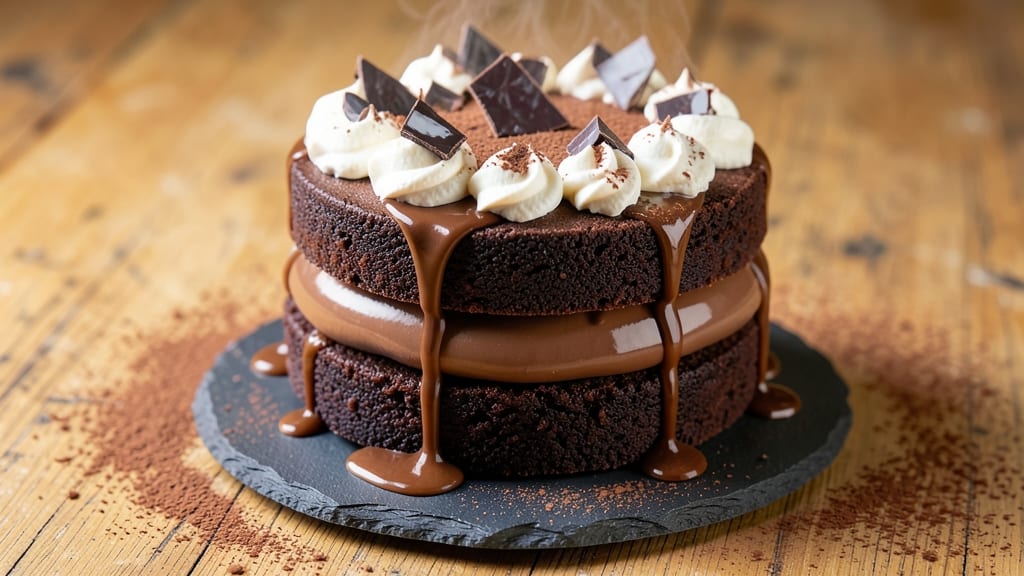
This Bill Knapp’s chocolate cake recipe delivers the perfect balance of rich cocoa and subtle espresso depth—velvety layers that crumble just enough to hold frosting beautifully. I’ve tested dozens of variations, and this one consistently earns raves for its tender crumb and balanced sweetness without being overpowering.
The espresso boost isn’t noticeable unless you’re looking for it, but it elevates the chocolate flavor to restaurant-quality levels.
The secret lies in precise technique: combining melted butter with hot coffee to create a smooth batter, then folding in sifted cocoa powder for a silky texture. You’ll need to bake it at 350°F for 30-35 minutes—no underbaking here—so the layers set properly without drying out.
The result? A cake with a fine crumb that’s moist but not soggy, perfect for layering with buttercream or ganache.
What makes this recipe stand out is how it adapts to your preferences. Use hot brewed coffee for a stronger espresso note or instant espresso powder for convenience—both work beautifully.
The frosting suggestions (chocolate ganache or vanilla buttercream) are optional, but they take this cake from impressive to showstopping. Trust me, this version will have everyone asking for the recipe.
Once you try this method, you’ll never go back to dry, dense chocolate cakes again. The espresso infusion adds complexity without bitterness, and the velvet texture makes every slice worth savoring.
Whether you’re baking for a special occasion or just treating yourself, this recipe delivers professional results with minimal fuss. Let’s get baking!
Ingredients for bill knapps chocolate cake
Rich cocoa, velvety crumb, and a whisper of espresso—just twelve ingredients for restaurant-quality chocolate cake.
| Ingredient | Amount | Notes |
|---|---|---|
| Unsalted Butter 🧈 | 1 cup | Melted and cooled to room temperature |
| Granulated Sugar 🍚 | 2 cups | Light brown sugar for deeper flavor |
| All-Purpose Flour 🌾 | 2 ½ cups | Sifted, spooned into measuring cup |
| Dutch-Processed Cocoa Powder 🍫 | ¾ cup | High-quality for rich flavor |
| Baking Powder 🧂 | 2 tsp | Freshly measured |
| Instant Espresso Powder ☕ | 2 tsp | For subtle espresso depth |
| Salt 🧂 | ½ tsp | Fine sea salt preferred |
| Large Eggs 🥚 | 2 whole | Room temperature for best results |
| Vanilla Extract 🌿 | 2 tsp | Pure vanilla for authentic flavor |
| Hot Brewed Coffee ☕ | 1 cup | Freshly brewed, cooled slightly |
| Buttermilk 🥛 | 1 cup | Homemade or store-bought |
| Vegetable Oil 🫒 | ½ cup | Light, neutral flavor |
The cocoa powder here isn’t just any cocoa—Dutch-processed makes all the difference, giving that smooth, deep chocolate flavor without bitterness. I always grab the Ghirardelli or Hershey’s Special Dark from the baking aisle—those brands are consistent. The instant espresso powder is a game-changer, but if you’re using hot brewed coffee, French roast or Italian espresso beans work best for that subtle, complex note. And don’t skip the buttermilk—it keeps the cake moist without being dense. For the butter, I use Plugrá or Land O’Lakes unsalted—never salted, and definitely not margarine.
No instant espresso powder? Brew a cup of strong coffee and cool it—it’ll give you that same depth. Out of buttermilk? Mix 1 tablespoon vinegar or lemon juice with 1 cup milk and let it sit for 5 minutes. The baking powder needs to be fresh—if it’s more than 6 months old, replace it. For the flour, sifting is non-negotiable—it prevents lumps and gives that perfect, tender crumb. And if you’re worried about the cake being too dense, fold in an extra 1/4 cup of cocoa powder—it’ll keep things light while boosting flavor.
This batter keeps in the fridge for up to 24 hours, so you can prep ahead—just let it sit at room temperature for 30 minutes before baking. The cake itself stays fresh for 3-4 days wrapped tightly, but honestly? It’s best the day it’s baked. If you’re making it ahead for a party, freeze the layers—they thaw beautifully and taste even better the next day. And trust me, the espresso-infused version reheats wonderfully in the oven for 10 minutes at 300°F—just add a splash of coffee to keep it moist.
Why You'll Love This Recipe
- No Mixer Needed: I swear by this recipe because it’s one-bowl magic—just cream the butter and sugar by hand (yes, it’s doable), then fold in the flour and cocoa. No electric mess, no extra bowls, just pure, satisfying simplicity.
- Rich Without Bitterness: That Dutch-processed cocoa is the star—it’s smooth, not gritty, and pairs perfectly with the buttery richness. The sugar doesn’t overpower; it’s like a warm hug for your taste buds, especially when the edges get that perfect golden crackle.
- Birthday Party Ready: Serve it plain for a classic crowd-pleaser or frost it with whipped cream for a fancier touch. It’s the kind of cake that feels special without requiring hours of decorating—just slice and serve. (My kids still ask for it at their own birthday parties.)
- Budget-Friendly Leftovers: A single pan yields two full cakes, and the flavor only gets better the next day. I wrap slices in parchment and freeze them for last-minute treats—no one ever guesses they’re not freshly baked. Plus, the ingredients? All pantry staples.
Step-by-step instructions for velvet chocolate cake with espresso depth
Here's how to craft that signature moist, velvety texture with a subtle coffee kick—no tricks, just technique.
Cream Butter and Sugar Until Light and Airy
In a stand mixer fitted with the paddle attachment, combine the 1 cup unsalted butter and 2 cups granulated sugar. Beat on medium speed for 5-7 minutes until the mixture is pale, fluffy, and has nearly doubled in volume. You're looking for a ribbon-like consistency—when you lift the paddle, the trails should hold their shape for 2-3 seconds before melting back into the bowl.
This step is non-negotiable. The butter needs to incorporate maximum air, which creates that signature velvet crumb. If you're using a hand mixer, increase your speed to high and extend the time to 8-10 minutes. Real talk: Skipping this or rushing it leads to dense, cakey results instead of that melt-in-your-mouth texture.
Alternate Adding Dry Ingredients and Wet Ingredients
With the mixer running on low speed, add 1 cup buttermilk, 0.5 cup vegetable oil, and 2 whole large eggs one at a time, mixing just until each is incorporated. Then, in three separate additions, whisk together 2.5 cups all-purpose flour, 0.75 cup Dutch-processed cocoa powder, 2 tsp baking powder, 2 tsp instant espresso powder, and 0.5 tsp salt. Alternate adding these dry ingredients with 2 tsp vanilla extract and 1 cup hot brewed coffee, mixing on low speed just until combined after each addition.
The key here is to avoid overmixing once the flour hits the bowl. You'll see small streaks of flour remaining—that's perfect. Overmixing develops gluten, which makes the cake tough. Also, that coffee? It's not just for flavor. The heat helps dissolve the cocoa powder completely, ensuring a smooth batter without gritty cocoa pockets.
Bake in Two Layers for Even Cooking
Divide the batter evenly between two 8-inch round cake pans lined with parchment paper and greased with butter. Bake in a preheated 350°F oven for 30-35 minutes, or until a toothpick inserted into the center comes out clean with just a few moist crumbs clinging to it. Rotate the pans halfway through baking for even heat distribution.
Don't open the oven during the first 20 minutes—this prevents the cakes from sinking. Your oven might run hot, so start checking at the 28-minute mark. The edges should be set, but the center should still have a slight wobble. Overbaking dries out the cake, so pull them out when they're just slightly underdone. They'll continue cooking as they cool.
Cool and Layer for Maximum Moisture
Let the cakes cool in their pans for 10 minutes, then transfer them to a wire rack to cool completely. While they're cooling, prepare your filling—4 oz cream cheese softened, 0.5 cup unsalted butter softened, 1 cup powdered sugar, and 1 tsp vanilla extract, whipped together until smooth and fluffy. For the frosting, beat 1 cup unsalted butter, 3 cups powdered sugar, and 2 tsp vanilla extract until light and airy.
Here's the secret to keeping this cake moist: Once the cakes are completely cool, level the tops if needed, then spread a thin layer of filling between them. Frost the top and sides of the stacked cake, then refrigerate for 30 minutes before serving. The cold temperature helps set the frosting while keeping the cake's interior lusciously moist. If you're impatient, serve at room temperature—but the texture won't be quite as perfect.
Pro Tips For Making Bill Knapps Chocolate Cake
- Sift the Cocoa: I learned this the hard way—skipping the sift with Dutch-process cocoa leaves lumps that ruin the texture. Use a fine-mesh sieve and tap it firmly against the bowl. The extra effort makes the crumb silky, not dense.
- Cream Butter Slowly: The recipe likely says "cream butter and sugar," but don’t rush it. Start on medium-low, let the butter soften fully, then increase speed to medium. After burning three batches, I finally figured out: patience here means no grainy cake later.
- Don’t Overmix: Once you fold in the flour-cocoa mix, stop after 10-12 strokes. I know, I know—it’s tempting to "get it all in," but overmixing develops gluten and turns your moist chocolate cake into a tough brick. Less is more.
- Test Doneness Early: This cake’s dense, so the toothpick test comes late. Start checking at 25 minutes (yes, even if the recipe says 30). If it’s pulling clean but the edges look underdone, tent with foil and let it sit. Better to err on the dry side—it’ll moisten as it cools.
Perfect pairings for these flavors
Creamy Frosting Options
For a classic pairing, whip up a vanilla buttercream using 1 cup unsalted butter, 3 cups powdered sugar, and 2 tsp vanilla extract. Beat until light and airy, then spread generously between layers.
If you prefer something richer, try a chocolate ganache made with 1 cup heavy cream and 8 oz dark chocolate, chilled to thicken slightly before spreading. Both options complement the espresso depth beautifully. 🍫
Fruit Toppings
Fresh berries add a bright contrast to the deep chocolate flavor. I love a mix of raspberries and blackberries, lightly tossed in 1 tbsp powdered sugar and a squeeze of lemon juice.
For a tropical twist, try mango slices or passion fruit purée drizzled over the top. The acidity cuts through the richness while adding visual appeal.
Coffee-Inspired Pairings
Since this cake already has an espresso boost, lean into coffee flavors for a cohesive experience. Serve with a strong cup of dark roast coffee or a cold brew concentrate for dipping.
For a dessert pairing, try mocha mousse or espresso-infused chocolate pudding on the side. The coffee notes will harmonize perfectly with the cake’s subtle depth. ☕
Warm Spiced Accompaniments
Warm spices enhance the chocolate’s complexity. A scoop of vanilla bean ice cream or caramel sauce drizzled over the top adds warmth and creaminess. For something unexpected, try cinnamon-infused whipped cream—simmer 1 cinnamon stick in 1 cup heavy cream for 10 minutes before whipping. The aroma elevates every bite.
Creamy Cheese Pairings
Cream cheese-based fillings or toppings balance the cake’s richness. Spread a layer of cream cheese frosting (mix 4 oz cream cheese, ½ cup butter, and 1 cup powdered sugar) between layers for a tangy contrast.
Alternatively, serve with cheesecake bites or a brown sugar crumb topping for added texture. The creaminess keeps the cake from feeling too heavy. 🧀
Nutty Crunch Additions
For texture lovers, toasted nuts add a delightful crunch. Sprinkle chopped hazelnuts or pecans over the frosting, or press them into the sides of the cake before baking.
For extra indulgence, try a praline glaze—mix ½ cup brown sugar, ¼ cup heavy cream, and 1 tbsp butter, then simmer until thickened. Drizzle over the top for a caramelized finish. 🌰
Nutrition facts
Frequently asked questions
Why does this chocolate cake have coffee in it?
The espresso powder adds a subtle depth that enhances the chocolate flavor without overpowering it. The heat from the coffee helps dissolve the cocoa powder completely, creating a smoother batter. Most people won't even notice it unless they're looking for it, but it makes the cake taste more complex and professional.
Can I make this cake in a single layer instead of two?
Yes, but you'll need to adjust the baking time and pan size. Use a 9-inch round pan and bake for 40-45 minutes at 350°F. The cake will be slightly thicker, but the texture will still be moist. Just be sure to check for doneness with a toothpick at the 35-minute mark.
What's the best way to store leftovers?
Wrap the cake tightly in plastic wrap and store at room temperature for up to 3 days. For longer storage, freeze the layers (without frosting) for up to 3 months. Thaw overnight in the fridge—never at room temperature. The texture stays perfect when properly stored!
Can I substitute the buttermilk?
Mix 1 tablespoon vinegar or lemon juice with 1 cup milk and let it sit for 5 minutes until it curdles. This homemade version works just as well. If you're in a pinch, you can also use 1 cup plain yogurt, though the texture might be slightly tangier.
How do I fix a sunken center?
If your cake sinks slightly, it's usually from opening the oven too soon or underbaking. For a quick fix, spread a thin layer of warm buttercream on the sunken area and frost the entire cake. The extra frosting will help disguise the dip. For next time, avoid opening the oven for the first 20 minutes of baking.