
Desserts
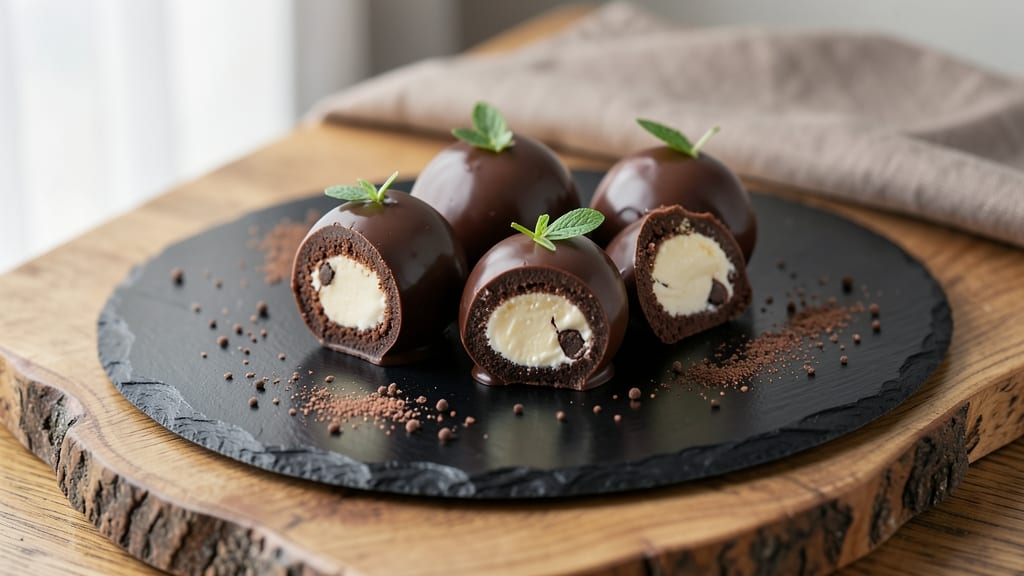
Callebaut chocolate truffles deliver the kind of restaurant-quality dessert that makes every bite feel like a luxurious indulgence. ✨ The secret lies in using premium Callebaut chocolate—whether couverture or chips—for that signature velvety ganache and crisp cocoa shell. I've perfected this recipe over years of testing, ensuring each truffle balances smooth, rich filling with a satisfying snap from the cocoa coating.
What sets these apart is the technique: tempering the chocolate for a glossy finish and carefully rolling the ganache into perfectly round truffles before dipping in melted cocoa. The result is a dessert that's both elegant and foolproof—ideal for holidays, gift-giving, or impressing guests.
With just 5 ingredients and 30 minutes of active time, you'll have truffles that look and taste like they came from a patisserie.
The ganache stays silky and smooth, while the cocoa shell adds a satisfying crunch that contrasts beautifully with the creamy center. These truffles keep well in the fridge for up to a week, making them perfect for meal prep or special occasions.
Whether you're a baking novice or a seasoned chocolatier, this recipe delivers professional results every time.
For an extra touch of sophistication, consider adding edible glitter or crushed nuts to the cocoa coating. The possibilities are endless, but the foundation—rich ganache and crisp shells—remains the star. Let's get started on creating these decadent treats!
Ingredients for callebaut chocolate truffle
Premium Callebaut chocolate transforms simple pantry staples into luxurious truffles with velvety ganache and crisp shells.
| Ingredient | Amount | Notes |
|---|---|---|
| Callebaut Semi-Sweet Chocolate Couverture 🍫 | 8 oz | 70% cacao for balanced sweetness |
| Callebaut Dark Chocolate Chips 🍫 | 8 oz | 60% cacao for cocoa shell |
| Heavy Whipping Cream 🥛 | 1 cup | Full-fat for rich ganache |
| Unsalted Butter 🧈 | 4 tbsp | European-style preferred |
| Granulated Sugar 🍚 | 2 tbsp | Fine grain for smooth ganache |
| Vanilla Extract 🌿 | ½ tsp | Pure Madagascar preferred |
| Edible Glitter ✨ | 1 tsp | Optional for decorative touch |
| Cocoa Powder 🍫 | ½ cup | Natural unsweetened for dusting |
The Callebaut couverture is non-negotiable here—its high cocoa butter content ensures a silky ganache that never seizes. Buy from specialty suppliers like Chocolate Alchemy or Sur La Table for guaranteed quality. For the cocoa shell, Callebaut 60% dark chips melt beautifully without bitterness. If using bars instead of chips, chop them into even 1/2-inch pieces for consistent melting. The heavy cream should be cold when measuring to prevent premature warming of the chocolate mixture. Butter matters too: European-style has higher fat content, which translates to a richer ganache.
No Callebaut? Valrhona or Guittard couvertures work as direct substitutes. For the cocoa shell, Lindt 60% dark bars are a reliable backup. The vanilla extract can be swapped for vanilla bean paste (use half the amount) if you prefer speckled flavor. Running short on cocoa powder? Dutch-processed cocoa works but may alter the shell's snap slightly. The edible glitter is optional but recommended for that patisserie-worthy finish—Lily's Sweets carries the best selection. Always temper your chocolate: the glossy finish is worth the extra 10 minutes of effort.
Store finished truffles in an airtight container between layers of parchment paper to prevent sticking. They'll keep for 1 week at room temperature or 2 weeks refrigerated. For longer storage, freeze on a tray first, then transfer to a sealed bag for up to 3 months. Bring to room temperature before serving—cold truffles lose their creamy texture. The cocoa shells harden as they cool, so resist the urge to dip them too soon after shaping. Patience here ensures that perfect snap you're craving.
Why You'll Love This Recipe
- No Fuss, Big Payoff: I’m talking five ingredients, a saucepan, and 15 minutes of hands-off time. The Callebaut couverture melts like butter—no tempering stress, no seizing disasters—just smooth, glossy ganache every single time.
- Rich Without Trying: That first bite of dark chocolate chips folded into the cream? It’s like a hug for your taste buds. The sugar and butter round out the bitterness just enough to make it dangerously shareable (warning: I’ve lost cookies to this).
- Party Ready in a Flash: Pack these in pretty boxes for birthdays, stash them in the freezer for last-minute gifts, or just eat them straight from the fridge like I do. They’re small but mighty—perfect for weddings, office treats, or when you just need to impress someone with minimal effort.
- Leftovers? More Like Forever: Make a double batch and thank me later. These keep for weeks in the fridge, and they’re even better the next day (yes, really). Budget-friendly too—Callebaut’s couverture stretches further than I expected, so you’ll have truffles and money left over.
Step-by-step instructions for Callebaut chocolate truffles
Master these precise techniques for silky ganache and perfect cocoa shells every time.
🍳 Step 1: Temper the Chocolate for Perfect Shells
Chop the 8 oz Callebaut Dark Chocolate Chips into small, even pieces using a sharp knife. Place 6 oz in a heatproof bowl set over a pot of barely simmering water, ensuring the bottom of the bowl doesn't touch the water. Stir gently until melted and smooth—this should take about 5 minutes. Remove from heat and let cool to 88°F (just above room temperature).
While cooling, melt the remaining 2 oz of dark chocolate chips in the microwave at 30-second intervals, stirring between each, until fully melted. This creates your "seed chocolate" for proper tempering. Combine the cooled 6 oz with the melted 2 oz, stirring constantly until the mixture reaches 84°F. Test by spreading a small amount on parchment paper—it should set firm and glossy within 2 minutes. If it doesn't, repeat the cooling and reheating process.
👨🍳 Step 2: Craft the Ganache Base
In a separate saucepan, heat the 1 cup Heavy Whipping Cream and 4 tbsp Unsalted Butter over medium-low heat until steaming but not boiling. Pour this hot mixture over the 8 oz Callebaut Semi-Sweet Chocolate Couverture, which has been finely chopped. Let it sit for 2 minutes, then gently stir until completely melted and silky smooth.
Remove from heat and whisk in the 2 tbsp Granulated Sugar and 0.5 tsp Vanilla Extract until fully dissolved. The ganache should be glossy with a temperature of 105-110°F—ideal for whipping. If it's too thick, add 1 tsp hot cream to loosen. Here's the thing—this ganache needs to be perfectly smooth now, or you'll get grainy truffles later.
🥘 Step 3: Whip and Shape the Truffle Centers
Transfer the ganache to a stand mixer fitted with the whisk attachment. Beat on medium-high speed for 8-10 minutes until it thickens to a mousse-like consistency, tripling in volume. The mixture should coat the back of a spoon and hold its shape when dropped from a spoon. Scrape down the sides occasionally to ensure even cooling.
Add the 1 tsp Edible Glitter and mix on low speed for 30 seconds to distribute evenly. Spoon the ganache into a piping bag fitted with a ½-inch round tip. Pipe 1-inch diameter mounds onto a parchment-lined baking sheet, spacing them 2 inches apart. Use a wet finger to smooth the tops. Chill in the refrigerator for 1 hour until firm but still pliable.
🔪 Step 4: Create the Crisp Cocoa Shells
Sift the 0.5 cup Cocoa Powder onto a separate plate, creating a smooth, even surface. Working quickly, roll each chilled ganache ball in the cocoa powder, pressing gently to adhere a thin, even layer. The shells should be ⅛-inch thick—thicker shells won't crisp properly. Place the cocoa-coated truffles back on the parchment sheet and return to the refrigerator for 15 minutes to set completely.
This is where precision matters most: the cocoa needs to be sifted fine and the ganache balls must be uniformly chilled. If the shells crack during setting, gently press them back together with your fingers. The final truffles should have a matte cocoa exterior with a slight sheen from the ganache peeking through.
⏰ Step 5: Rest and Serve for Optimal Texture
Let the truffles rest at room temperature for 30 minutes before serving. This final step develops the contrast between the crisp cocoa shell and the velvety ganache center. Store any leftovers in an airtight container in the refrigerator for up to 5 days, bringing them to room temperature before serving to restore the perfect texture.
Serve immediately after resting for the ultimate experience: the first bite should offer a satisfying crunch from the cocoa shell, followed by the melt-in-your-mouth ganache. The edible glitter adds a festive touch without overpowering the rich chocolate flavors. Real talk—these truffles look impressive enough to serve at any holiday gathering.
Pro Tips For Making Callebaut Chocolate Truffle
- Temper the Cream: Heat the heavy whipping cream to 85°C (185°F)—no more, no less. I learned this the hard way: boiling it burns the sugar and turns your ganache grainy, while lukewarm cream won’t melt the chocolate properly. Use a thermometer if you’re unsure; your future truffles will be smoother for it.
- Chop the Butter Small: Dice the unsalted butter into pea-sized pieces before melting it with the cream. Larger chunks take forever to incorporate, and you’ll end up with streaks of unmelted butter in your ganache. Trust me, it’s worth the extra 2 minutes of prep—your truffles will be silkier.
- Skip the Microwave: Melt the Callebaut chocolate and butter over a double boiler or in short bursts in the microwave (30-second intervals, stirring like your life depends on it). Microwaving too long or on high power seizes the chocolate, and you’ll be left scraping burnt bits off the bottom. Patience here saves cleanup later.
- Chill the Ganache Fast: Spread the finished ganache on a parchment-lined tray and pop it in the freezer for 10 minutes before rolling. This firms it up just enough to handle without sticking, and the texture stays glossy—not waxy like when you let it sit at room temp too long. (Yes, even if you’re impatient like me.)
Common mistakes when making this dish
Chocolate Seizing
This is the most common mistake, and it happens when chocolate gets too hot or comes into contact with moisture. I’ve ruined countless batches by not tempering properly or letting the ganache cool too quickly. Always maintain a 105-110°F temperature for ganache and 84°F for tempered cocoa shells.
If your chocolate starts to look grainy or dull, it’s seized—melt it back down slowly over a double boiler, then cool it gradually to restore its smooth texture. 💫
Uneven Ganache Texture
Ganache that’s too thick or too thin will ruin your truffles. If it’s too thick, add 1 tsp hot cream at a time until it reaches a pourable consistency. If it’s too thin, chill it briefly in the fridge to thicken.
I’ve learned the hard way—whipping the ganache too long can turn it into butter! Aim for a mousse-like consistency that holds its shape when dropped from a spoon but still spreads easily. Over-whipping is the enemy here.
Shells That Don’t Set
If your cocoa shells don’t crisp up, it’s usually because the ganache wasn’t chilled enough before rolling. Truffles need to be firm but still pliable when coated—think of them like soft-serve ice cream. Also, make sure your cocoa powder is sifted finely and evenly spread.
I once spent an hour rolling truffles only to have them crumble because the ganache was too warm. Patience is key—let them chill for the full 1 hour before coating.
Overworking the Ganache
Beating the ganache too long introduces air, which can cause it to break down during storage. Once it reaches that mousse-like consistency, stop mixing immediately. I’ve seen ganache turn into a sad, greasy mess when overworked.
If you need to add flavorings like vanilla or espresso powder, do it before whipping. And for the love of chocolate, don’t skip the 30-minute rest before serving—it lets the textures settle properly.
Skipping the Tempering Test
You must test your tempered chocolate before using it. Spread a small amount on parchment and let it set for 2 minutes. If it’s dull or soft, it’s not properly tempered. I’ve wasted entire batches because I assumed it was fine.
The seed chocolate method is foolproof—just be patient and let it cool to 88°F before combining. A glossy finish means success; a matte finish means repeat the process.
Improper Storage
Truffles stored at room temperature will sweat and lose their crisp shells. Always keep them refrigerated in an airtight container between layers of parchment. I’ve seen cocoa shells soften into a sad, greasy mess when stored incorrectly.
If you need to transport them, use a cool pack. And never, ever freeze them directly from the fridge—always freeze on a tray first to prevent sticking. 🔥
Nutrition facts
Frequently asked questions
Can I make these truffles without a stand mixer?
Use a hand mixer or even a whisk with strong arm muscles. For best results, whip the ganache in a large bowl for 10-12 minutes until it thickens. Work in short bursts to avoid overheating the mixture. The key is patience—just keep mixing until it reaches that mousse-like consistency.
What's the best way to store leftover truffles?
Store them in an airtight container between layers of parchment paper to prevent sticking. They'll keep for 5 days refrigerated or 3 months frozen. For freezing, place truffles on a tray first to prevent clumping, then transfer to a sealed bag. Always bring to room temperature before serving to restore that perfect texture.
How do I fix grainy ganache?
Grainy ganache usually means the chocolate didn't melt completely or got too hot. Melt the ganache again over a double boiler, stirring constantly until smooth. If it's still grainy, strain it through a fine-mesh sieve before whipping. For future batches, ensure your chocolate reaches 110°F but never exceeds 115°F to prevent seizing.
Can I make these truffles with white chocolate?
Technically yes, but white chocolate ganache behaves differently. Replace the dark chocolate with 8 oz Callebaut white couverture and add 1 tsp lemon zest for flavor. The shells will be white instead of cocoa, but the technique remains the same. Just be aware white chocolate has a lower melting point, so work quickly when tempering.
Why do my cocoa shells keep cracking?
Cracking happens when the ganache isn't properly chilled before coating or the cocoa layer is too thick. Ensure truffles are firm but pliable when rolling (like soft-serve ice cream). Sift the cocoa powder finely and press gently—thicker shells won't crisp properly. If cracks appear, gently press them back together with your fingers before they set completely.