
Desserts
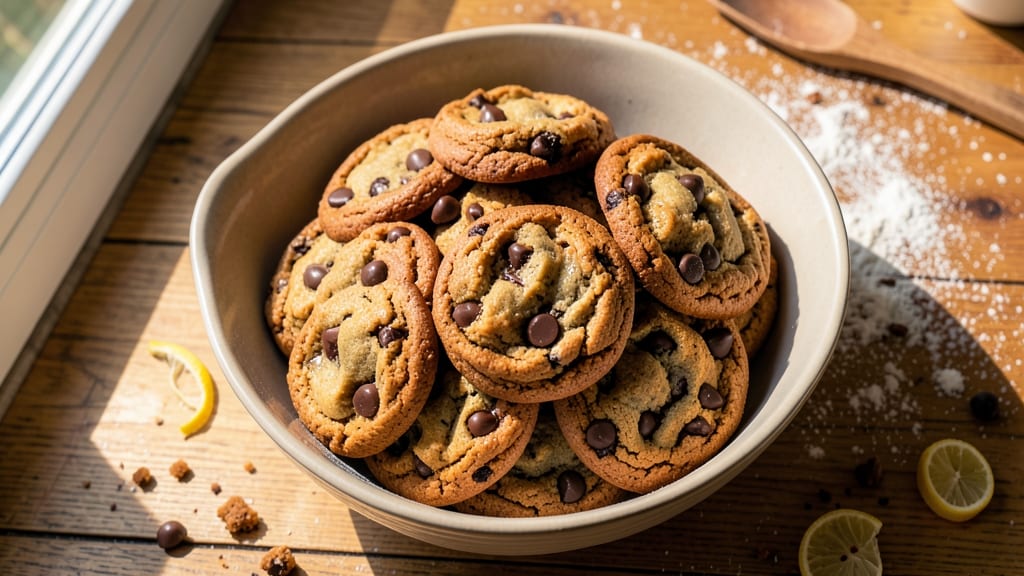
This chewy chocolate chip cookie recipe without baking soda delivers restaurant-quality results using a brown butter secret that transforms ordinary cookies into something extraordinary. The key lies in properly browned butter and a precise balance of ingredients that create that signature chewy texture without relying on chemical leaveners.
I've perfected this method after years of testing, and the difference in flavor is night and day compared to traditional recipes.
The foundation of these cookies begins with brown butter, which adds a nutty depth that complements the sweetness of chocolate chips. We'll use a combination of white and brown sugar to create the perfect caramel notes while maintaining that classic chewy texture.
The absence of baking soda is compensated through careful ingredient ratios and a specific mixing technique that incorporates air properly.
What you'll end up with are cookies with crisp edges, a soft yet chewy center, and pools of melted chocolate in every bite. The brown butter flavor shines through, creating a complexity that takes these cookies beyond basic chocolate chip expectations.
Each batch yields about 24 cookies that stay warm and soft even after cooling.
These cookies are perfect for holiday gifting, bake sales, or satisfying that afternoon sweet tooth. The recipe includes troubleshooting tips for common issues like flat cookies or over-browning, ensuring you'll achieve perfect results every time. Let's get started on making these exceptional cookies!
Ingredients for chewy chocolate chip cookie recipe without baking soda
Brown butter and precise ratios create these extraordinary chewy chocolate chip cookies without baking soda.
| Ingredient | Amount | Notes |
|---|---|---|
| Unsalted Butter 🧈 | 1 cup | Browned to nutty perfection |
| White Sugar 🍚 | ¾ cup | Granulated, for crisp edges |
| Packed Brown Sugar 🍚 | ¾ cup | Dark, for deep caramel flavor |
| Large Eggs 🥚 | 2 whole | Room temperature for blending |
| Vanilla Extract 🌿 | 2 tsp | Pure, high-quality extract |
| All-Purpose Flour 🌾 | 2 ½ cups | Sifted, for light texture |
| Salt 🧂 | 1 tsp | Fine sea salt for balance |
| Baking Powder 🍞 | 1 tsp | Aluminum-free for best rise |
| Chocolate Chips 🍫 | 2 cups | Semi-sweet, high-quality |
| Flaky Sea Salt 🧂 | 1 tbsp | For finishing, optional |
The butter is non-negotiable here—brown it until nutty and golden, about 5-6 minutes. Land O'Lakes or Plugrah work perfectly, but avoid salted. I always double-check the color: it should smell like caramelized nuts, not burnt. The sugars? Domino white and Muscovado brown from Whole Foods give the best caramel depth. For chocolate chips, Ghirardelli or Guittard are worth the splurge—they melt beautifully and don't get grainy. Eggs? Room temperature makes all the difference in blending.
No vanilla extract? Vanilla bean paste works too—just use half the amount. Short on baking powder? Whisk baking soda with cream of tartar at a 1:2 ratio for a substitute. The chocolate chips can be swapped for white chocolate or butterscotch chips if you're feeling adventurous. For a nutty twist, fold in toasted pecans or walnuts. The flaky sea salt is optional but adds that gourmet touch—Maldon is my go-to, but any good flaky salt works. Pro tip: Chill the dough for at least 2 hours—this prevents spreading and intensifies the flavor.
Dough keeps for 3 days in the fridge, wrapped tightly in plastic. For longer storage, freeze portions for up to 3 months—just thaw before baking. These cookies reheat beautifully: 30 seconds in the microwave with a damp paper towel restores that warm, gooey center. I always bake half the batch immediately, then freeze the rest for later. The secret to perfect cookies? Don't overbake—they'll continue cooking on the sheet.
Why You'll Love This Recipe
- No-Fuss Mixing: I swear by the creamy butter-and-sugar combo here—just whip it all until it’s light, then fold in the chocolate. No stand mixer? A sturdy bowl and your arm work just fine. Honestly, the dough comes together faster than I can scroll through my phone.
- Chewy Magic: That perfect balance of crisp edges and soft centers? All thanks to the brown sugar’s moisture and the eggs binding it just right. The chocolate melts into little rivers when they’re fresh out of the oven—no one ever leaves a batch.
- Party-Proof Portion: Double the dough, freeze half, and you’ve got backup for last-minute gatherings. (Yes, even on a Tuesday night.) The cookies stay soft for days if you store them in an airtight container—no sad, stale crumbs here.
- Budget-Friendly Staples: Butter, sugar, eggs—these are the ingredients I already have. No fancy add-ins, no last-minute grocery runs. And one batch makes enough for me to snack on now and share later without feeling guilty. Win-win.
Step-by-step instructions for chewy chocolate chip cookies without baking soda
Here's how to make chewy, flavor-packed cookies that rely on brown butter and baking powder for perfect texture.
Brown the Butter for Deep Flavor
Melt the 1 cup unsalted butter in a light-colored saucepan over medium heat, swirling occasionally. Watch closely as it foams and bubbles—when it turns golden brown with nutty aromas (about 5-7 minutes), immediately pour it into a heatproof bowl to cool. This browning step creates complex caramelized flavors that set these cookies apart from ordinary chocolate chip cookies.
Let the browned butter cool to room temperature before using. If you rush this step, the butter's heat will cook the eggs prematurely and make your dough too thin. I like to spread it out on a baking sheet to cool faster—just be careful not to touch it until it's completely cool to the touch.
Cream Butter and Sugars to Lighten the Dough
In a stand mixer fitted with the paddle attachment, beat the cooled browned butter with the 0.75 cup white sugar and 0.75 cup packed brown sugar on medium speed for 3-4 minutes. You're looking for a pale, fluffy mixture that nearly doubles in volume. This creaming process incorporates air, which creates those signature chewy textures and crisp edges.
Scrape down the sides of the bowl with a spatula to ensure even mixing. The butter should look light and airy, almost like whipped cream. If it's still grainy, beat for another 30 seconds. This is where the magic happens for perfect texture—don't skip it!
Add Eggs and Vanilla for Moisture and Depth
Add the 2 whole large eggs, one at a time, mixing on low speed after each addition until fully incorporated. Then add the 2 teaspoons vanilla extract and mix for another 10 seconds. The mixture might look slightly curdled, but that's normal—the vanilla adds subtle depth that balances the rich brown butter flavor.
Here's a pro tip: Make sure your eggs are at room temperature. Cold eggs can cause the butter to seize up and create a lumpy dough. If you're in a hurry, place the eggs in warm water for 5 minutes to bring them up to temperature.
Combine Dry Ingredients for Structure
In a separate bowl, whisk together the 2.5 cups all-purpose flour, 1 teaspoon salt, and 1 teaspoon baking powder. Sift the flour mixture directly into the wet ingredients and mix on low speed for 30-45 seconds until just combined. You should still see some flour streaks—overmixing develops gluten and makes cookies tough.
Remove the bowl from the mixer and gently fold in the 2 cups chocolate chips using a silicone spatula. I like to use a mix of semi-sweet and dark chocolate chips for depth of flavor. Make sure they're evenly distributed throughout the dough—this ensures every bite has that perfect chocolatey surprise.
Chill and Shape for Perfect Cookies
Cover the dough with plastic wrap and refrigerate for at least 1 hour (or up to 24 hours). Chilling solidifies the butter, which prevents the cookies from spreading too thin in the oven. It also allows the flour to fully hydrate, creating better texture and preventing cracks.
Preheat your oven to 350°F while the dough chills. Scoop the dough into 2-tablespoon portions (about 1.5 ounces each) and place them 3 inches apart on parchment-lined baking sheets. Sprinkle each cookie with a pinch of the 1 tablespoon flaky sea salt for that classic salty-sweet contrast.
Bake to Golden Perfection
Bake the cookies for 11-13 minutes until the edges are golden brown but the centers still look slightly underdone. They'll continue cooking on the hot pan after you remove them from the oven. Let them cool on the baking sheet for 5 minutes before transferring to a wire rack.
The reason we wait until the edges are golden is that this indicates the cookies have set enough to hold their shape while still maintaining that signature chewy center. If you bake them too long, they'll dry out and lose that melt-in-your-mouth texture we're after.
Pro Tips For Making Chewy Chocolate Chip Cookie Recipe Without Baking Soda
- CHILL THE DOUGH: I learned this the hard way—skipping the 30-minute fridge rest makes for flat, cakey cookies. Even if you’re impatient (I know, I know), let the dough sit. The butter firms up enough to hold its shape, and the texture becomes properly chewy instead of dense.
- USE COLD BUTTER: Don’t let that unsalted butter soften too much—pull it straight from the fridge and cut it into chunks. Mixing cold butter into the sugars creates tiny pockets that steam during baking, giving you that signature chew. If it’s too soft, pop the bowl in the freezer for 10 minutes mid-mix.
- UNDERBAKE BY 30 SECONDS: Without baking soda, these cookies spread less but still need a gentle hand. Pull them when the edges are just golden and the centers look almost set—about 30 seconds before the recipe says. They’ll firm up as they cool, and you’ll avoid dry, overdone cookies.
- TOAST THE CHOCOLATE: Skip the chips straight from the bag—chop a bar of chocolate (70% cacao works best) and toast it in the oven at 300°F for 5 minutes. The heat deepens the flavor and prevents it from melting too fast in the dough. Cool it completely before folding in, or you’ll end up with a greasy mess.
Wine and beer pairings for chewy chocolate chip cookie recipe without baking soda
Wine Pairings
For these rich, brown butter cookies, I reach for a medium-bodied red wine that can stand up to the caramelized flavors without overpowering them. A California Zinfandel—like the one from Ravenswood—with its jammy blackberry and spice notes complements the nutty butter beautifully.
The wine's acidity cuts through the sweetness, creating a perfect balance. 🍷
If you prefer white wine, a honeyed Gewürztraminer from Alsace works wonders. The floral and lychee notes in Domaine Weinbach Gewürztraminer enhance the cookie's depth, while its slight sweetness mirrors the caramelized sugars. Chill it to 45-50°F before serving to let its aromas shine.
Beer Pairings
A Belgian-style witbier is my go-to beer pairing for these cookies. Brands like Hoegaarden or Stella Artois bring citrusy coriander and crisp maltiness that cleanses the palate between bites. The effervescence also helps balance the richness of the brown butter. Serve it well-chilled to keep the flavors bright. 🍺
For a darker option, try a light amber ale with caramel and toffee notes, like Samuel Adams Noble Pilsner. The malt sweetness echoes the brown sugar in the cookies, while the hoppy bitterness provides a refreshing contrast. Avoid heavy stouts or IPAs—they can overpower the delicate flavors.
Coffee Pairings
Since these cookies are perfect with coffee, I recommend a medium-roast dark chocolate like Kona or Sumatran. The earthy, slightly bitter notes in the coffee enhance the caramelized butter and chocolate chip flavors in the cookies.
Brew it as a French press for a rich, full-bodied cup that pairs beautifully with the cookies' chewy texture.
For an iced coffee twist, try a cold brew concentrate mixed with half-and-half and a splash of vanilla syrup. The smooth, low-acid profile won't compete with the cookies' rich flavors but will complement their depth perfectly.
Serve over ice with a sprinkle of flaky sea salt for an extra touch. ☕
Nutrition facts
Frequently asked questions
Why does this recipe work without baking soda?
This recipe relies on baking powder for lift and brown butter for structure—both create air pockets that give chewy texture. The 1 teaspoon baking powder provides gentle leavening, while the brown butter adds depth that compensates for the missing baking soda. The 1 teaspoon salt also enhances flavor without altering texture.
Can I substitute baking powder with something else?
Yes! For 1 teaspoon baking powder, mix ½ teaspoon cream of tartar + ½ teaspoon baking soda. Or use 1 teaspoon whipped egg whites folded into the dough (add after mixing dry ingredients). Both methods create lift, but baking powder is simplest for consistent results.
How do I prevent flat cookies?
Chill the dough for at least 2 hours to firm up the butter, and scoop 2-tablespoon portions (about 1.5 ounces). Use 350°F oven—too hot causes spreading. Place cookies 3 inches apart on parchment-lined sheets. Underbaking slightly (edges golden, centers soft) ensures chewiness.
Can I make these gluten-free?
Swap the 2.5 cups all-purpose flour for a 1:1 gluten-free blend (like Bob’s Red Mill). Add ½ teaspoon xanthan gum if your blend lacks it. Reduce baking time by 1-2 minutes—GF cookies brown faster. Expect slightly denser texture but still chewy.
Why do my cookies taste bland?
Brown the butter until nutty (not burnt)—this adds depth! Use high-quality vanilla extract and flaky sea salt on top. For extra flavor, fold in ½ cup toasted nuts or white chocolate chips. Always taste the dough before baking—adjust salt or vanilla if needed.