
Desserts
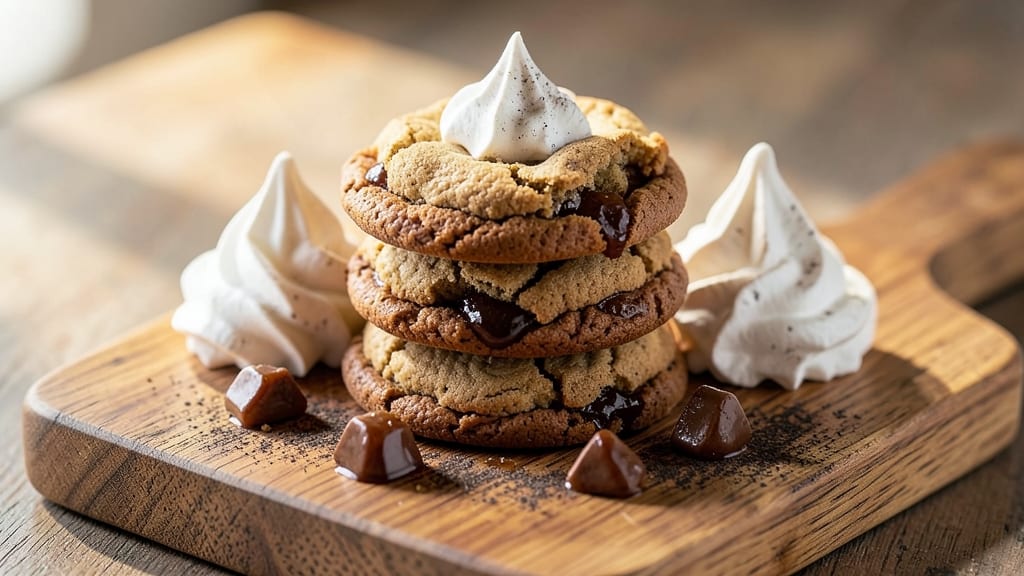
This chewy chocolate meringue cookie recipe delivers the perfect balance of crispy edges, chewy centers, and a coffee-infused core that transforms ordinary cookies into an irresistible treat. The secret lies in a triple-layered approach—rich chocolate dough, velvety meringue, and a deep coffee essence that elevates every bite.
I’ve refined this recipe over years, ensuring each cookie bakes just enough to maintain that signature chew while keeping the meringue light and airy.
The foundation starts with a dark chocolate dough packed with chunks for texture, wrapped in a smooth meringue layer that adds sweetness and structure. A touch of espresso powder in the dough intensifies the chocolate flavor without overpowering it, creating a sophisticated depth that pairs beautifully with the meringue’s brightness.
What makes these cookies truly special is the underbaking technique, which guarantees that chewy texture you crave while keeping the meringue tender.
By the time they emerge from the oven, you’ll have cookies with golden, crackly edges, a soft yet chewy interior, and a hint of coffee that lingers on your palate.
The contrast between the rich chocolate, the airy meringue, and the subtle coffee notes makes these cookies unforgettable—ideal for holidays, gifts, or simply indulging in a batch for yourself. Ready to bake?
For those with dietary preferences, swaps like aquafaba for meringue or dairy-free chocolate keep the magic alive. Let’s get started—your kitchen is about to smell like pure comfort.
Ingredients for chewy chocolate meringue cookies
Rich chocolate chunks, velvety meringue, and espresso-infused dough create these triple-layered cookies.
| Ingredient | Amount | Notes |
|---|---|---|
| Dark Chocolate Chunks 🍫 | 1 ½ cups | 70% cocoa or higher, roughly chopped |
| All-Purpose Flour 🌾 | 3 cups | Sifted for light texture |
| Granulated Sugar 🍚 | 1 ¼ cups | Superfine preferred for smoothness |
| Unsalted Butter 🧈 | 1 cup | Cold, cubed for even baking |
| Large Eggs 🥚 | 2 whole | Room temperature for meringue |
| Instant Espresso Powder ☕ | 2 tbsp | High-quality for deep flavor |
| Vanilla Extract 🌿 | 1 tbsp | Pure Madagascar preferred |
| Salt 🧂 | ½ tsp | Diamond Crystal kosher preferred |
| Granulated Sugar 🍚 | 1 ½ cups | For meringue, sifted |
| Aquafaba 🌱 | ½ cup | Chilled, for vegan option |
| Cream of Tartar 🧂 | ½ tsp | Stabilizes meringue |
| Vanilla Bean Seeds 🌿 | 1 tsp | Scraped from 1 pod |
The dark chocolate chunks are the soul of these cookies—70% cocoa or higher ensures deep, complex flavor without bitterness. Ghirardelli or Valrhona bars are my go-to for quality, but any high-end brand works. Chop them roughly—smaller pieces melt faster, creating pockets of gooey chocolate. The espresso powder is non-negotiable; Starbucks Via or Lavazza are my staples, but any instant espresso will do. For the meringue, aquafaba is a game-changer for vegan versions, but egg whites work beautifully too. Just make sure they're room temperature—cold whites won't whip properly.
No espresso powder? Instant coffee granules at double the amount work in a pinch, though the flavor won't be as refined. Swapping vanilla extract? Vanilla bean paste adds flecks of flavor, but pure extract is more consistent. For the butter, European-style unsalted (like Plugrá) has higher fat content, making the cookies richer. If you're short on time, pre-sifted flour from King Arthur saves effort without sacrificing texture. The cream of tartar is optional but helps stabilize the meringue—skip it if you're using aquafaba, as it's already slightly acidic.
Store dough in an airtight container for up to 3 days—it actually improves as it rests. Baked cookies keep their chew for 5 days in a tin at room temperature, or freeze for 3 months wrapped tightly. For gifting, portion into layers with parchment between each—clear cellophane bags make them look extra festive. Reheat in a 200°F oven for 5 minutes to revive any lost crispness.
Why You'll Love This Recipe
- No Fuss Mixing: I swear by this recipe because it’s literally just creaming butter and sugar, folding in eggs, and tossing in flour—no food processor, no weird ratios. The meringue magic happens with the eggs and sugar, and the dark chocolate chunks melt into those pockets like they’re meant to be there.
- Rich Without Effort: That first bite of crispy edges giving way to gooey chocolate and chewy meringue? It’s like dessert had a personality upgrade. The dark chocolate chunks stay melty (not bitter, promise), and the butter keeps everything tender but not cakey—honestly, it’s the kind of cookie that makes you pause mid-bite.
- Party in a Jar: Between us, these are my go-to for anything—holiday gifts, last-minute hostess favors, or just because. They freeze like a dream (no weird texture when thawed), so I make a batch and stash them. Wrap them in cellophane, tie a ribbon, and boom: instant wow factor with zero stress.
- Budget-Friendly Luxury: I use store-brand butter and eggs, and the dark chocolate chunks? A bulk bag lasts forever. The ingredients are simple but feel special—like you’re baking something gourmet without the markup. Plus, one batch stretches to gifts, snacks, and midnight cravings without breaking the bank.
Step-by-step instructions for triple-layered chocolate meringue cookies
Here's how to build cookies with crispy chocolate edges, a chewy coffee-infused center, and airy meringue peaks.
Prepare the Chocolate-Dipped Cookie Dough
In a stand mixer fitted with the paddle attachment, cream together the 1 cup unsalted butter and 1.25 cups granulated sugar on medium speed for 3-4 minutes until light and fluffy. This step is all about incorporating air—you'll know it's ready when the mixture nearly doubles in volume and turns pale. Scrape down the sides of the bowl to ensure even mixing.
Add the 2 whole large eggs, 1 tablespoon vanilla extract, and 1 teaspoon vanilla bean seeds, mixing on low speed until fully combined. In a separate bowl, whisk together the 3 cups all-purpose flour, 2 tablespoons instant espresso powder, and 0.5 teaspoon salt. Gradually add the dry ingredients to the wet, mixing on low speed just until combined—overmixing develops gluten, which makes cookies tough.
Fold in the 1.5 cups dark chocolate chunks by hand using a silicone spatula. The dough will be thick and fudgy. Divide the dough into 24 equal portions (about 1.5 tablespoons each) and roll into balls. Place them on a parchment-lined baking sheet and flatten slightly with your palm. Freeze for 30 minutes to firm up before baking.
Bake the Chocolate Cookie Base
Preheat your oven to 350°F. Bake the frozen dough balls for 10-12 minutes until the edges are set but the centers still look slightly underdone. They'll firm up as they cool. Let the cookies cool on the baking sheet for 5 minutes before transferring them to a wire rack. This base should be soft and fudgy—almost cake-like—so it can absorb the meringue later.
While the cookies cool, prepare the meringue mixture. In a clean bowl, whisk the 0.5 cup aquafaba (chilled) and 0.5 teaspoon cream of tartar until frothy. Gradually add the 1.5 cups granulated sugar and beat on high speed until stiff, glossy peaks form. This should take about 5-7 minutes—the meringue is ready when you can lift the beaters and the peaks hold their shape without collapsing.
Assemble the Triple-Layered Cookies
Once the chocolate bases are completely cool, place them on a parchment-lined baking sheet. Using a piping bag fitted with a small round tip, pipe a generous dollop of meringue (about 1 tablespoon) onto each cookie. Spread it slightly with the back of a spoon to create a flat, even layer. Return the cookies to the oven and bake at 325°F for 8-10 minutes, until the meringue is set but still slightly soft to the touch.
Remove the cookies from the oven and let them cool completely on the baking sheet. The meringue will firm up as it cools, creating a light, airy top layer. For the final touch, press a few additional dark chocolate chunks into the tops of the meringue while it's still slightly warm. This adds a satisfying crunch and visual contrast.
Rest and Serve for Maximum Flavor
Let the cookies rest at room temperature for at least 1 hour before serving. This allows the flavors to meld and the textures to fully develop. The chocolate base will be rich and chewy, the coffee-infused center will add depth, and the meringue top will provide a delicate, airy contrast. Store any leftovers in an airtight container for up to 5 days, though they're best enjoyed fresh.
Serve these cookies at room temperature with a cup of freshly brewed coffee or a glass of cold milk. The combination of the coffee-infused dough, the crisp chocolate chunks, and the light meringue creates a perfect balance of textures and flavors in every bite.
Pro Tips For Making Chewy Chocolate Meringue Cookies
- WHISK EGGS TO ROOM TEMP: Cold eggs make stiff meringues that won’t hold shape—your cookies will spread like pancakes instead of staying chewy. Let eggs sit in warm water for 5 minutes first, then whisk until the yolks are pale and ribbony. I used to skip this and ended up with sad, flat cookies that tasted more like fondant than meringue.
- CHOP CHOCOLATE UNIFORMLY: Big chunks melt unevenly, leaving you with dry pockets where the chocolate didn’t soften. Use a knife to hack dark chocolate into ¼-inch pieces—small enough to melt quickly but large enough to stay visible. Pro move: Toast the chopped chocolate for 2 minutes in the microwave (30-second bursts) before mixing it in for deeper flavor.
- UNDERBAKE THEM SLIGHTLY: These cookies look underdone when they hit the tray but need to bake until the edges are just set—about 10-12 minutes at 350°F (they’ll firm up as they cool). Pull them when the tops spring back slowly when pressed. Overbaking turns them dry; underbaking leaves them gummy. Trust the timer more than the look.
- REST THE DOUGH 30 MINUTES: The flour soaks up the butter better when it chills, and the eggs stabilize. Skip this, and your cookies will spread into thin, crispy discs. Wrap the dough in plastic and let it sit on the counter while you preheat the oven—no freezer required, just patience. (Yes, even if you’re impatient like me.)
Common mistakes when making your chewy chocolate meringue cookies
Overmixing the Dough
This is the #1 mistake that turns chewy cookies into tough, dry bricks. When mixing the wet and dry ingredients, stop as soon as they're just combined—about 20-30 seconds after the flour disappears. Overmixing develops gluten, which creates a dense, cake-like texture instead of the tender crumb we want.
I've ruined batches by letting the mixer run too long, so I now set a 30-second timer as a reminder. 🌾
Skipping the Freeze
Freezing the dough balls for 30 minutes before baking might seem optional, but it's what prevents spreading and ensures even baking. Without this step, the butter melts too quickly, causing flat, crispy cookies instead of our desired chewy centers.
I learned this the hard way when my first batch turned into sad, pancake-like discs. Pro tip: Use a parchment-lined tray for easy transfer to the oven.
Incorrect Meringue Texture
Under-whipped meringue leads to flat, sad cookies, while over-whipped meringue creates dry, crumbly tops. You're aiming for stiff, glossy peaks that hold their shape when you lift the beaters. If your meringue looks lumpy or collapses when piped, whip it 2-3 more minutes.
I use a hand mixer instead of a stand mixer for better control—less risk of over-whipping. And always make sure your bowl is spotless and grease-free for maximum stability.
Overbaking the Base
The chocolate cookie base should be set at the edges but still soft in the center when you remove it from the oven. Overbaking by even 1-2 minutes turns that perfect chewy texture into something dry and crumbly.
I pull mine out when the edges are just starting to turn golden—about 10-12 minutes at 350°F. The cookies will continue cooking on the baking sheet, so don't wait for them to look fully done.
Underbaking the Meringue
While the meringue needs to set, it shouldn't bake until completely firm. If you remove it too early, the meringue will collapse as it cools, ruining that beautiful airy top. Bake at 325°F for 8-10 minutes until the meringue is just set but still slightly soft to the touch.
The final firming happens during cooling. I test doneness by gently pressing the meringue—it should spring back slightly but still feel tender.
Rushing the Resting Time
Those cookies need at least 1 hour** of resting time before eating! This crucial step allows the flavors to meld and the textures to fully develop. I've made the mistake of diving in too soon, only to find the meringue still soft and the chocolate base underdeveloped.
The wait is worth it—trust me. Store cookies in an airtight container if you can't resist eating them immediately, but they'll taste even better after resting. 💫
Nutrition facts
Frequently asked questions
Why does my meringue look grainy or collapse when baking?
Meringue collapses when it's under-whipped (not stiff enough) or when the bowl has traces of grease. Use a spotless, grease-free bowl and whip until you get stiff, glossy peaks that hold their shape when you lift the beaters. For extra stability, add 0.5 tsp cream of tartar to the aquafaba or egg whites. If it still collapses, try baking at a slightly lower temperature (300°F instead of 325°F) for 10-12 minutes to set it gently.
Can I make these cookies without espresso powder?
Yes! Use 1 tsp instant coffee granules instead of espresso powder, but the flavor won't be as refined. For a deeper chocolate note without coffee, try adding 0.5 tsp cocoa powder to the dough. If you prefer a sweeter profile, reduce the sugar by 1 tbsp to balance the flavor. The coffee enhances the chocolate, but it's not mandatory—just expect a slightly milder taste.
How do I store these cookies to keep them chewy?
Store them in an airtight container at room temperature for up to 5 days, but they're best enjoyed within 24 hours for peak texture. For longer storage, freeze the unbaked cookies on a tray first, then transfer to a bag for up to 3 months. To revive stale cookies, warm them in a 200°F oven for 5 minutes—this restores the chew without overcooking the meringue.
Can I substitute aquafaba for egg whites in the meringue?
Use 0.5 cup aquafaba (chilled) in place of egg whites, but add 0.5 tsp cream of tartar to stabilize it. Whip it longer (7-10 minutes) since aquafaba whips faster but deflates more quickly. For a richer flavor, add 1 tsp vanilla extract or 0.5 tsp almond extract. The texture will be slightly denser but still delicious—these cookies are just as impressive without eggs!
What’s the secret to getting that perfect chewy texture?
The chew comes from underbaking the base (edges set but centers soft) and letting the cookies rest for 1 hour before eating. Also, use cold butter (cubed) and freeze the dough balls for 30 minutes before baking to prevent spreading. The meringue adds structure, but the real chewiness lives in the chocolate dough—keep it slightly underdone for that melt-in-your-mouth magic.