
Desserts
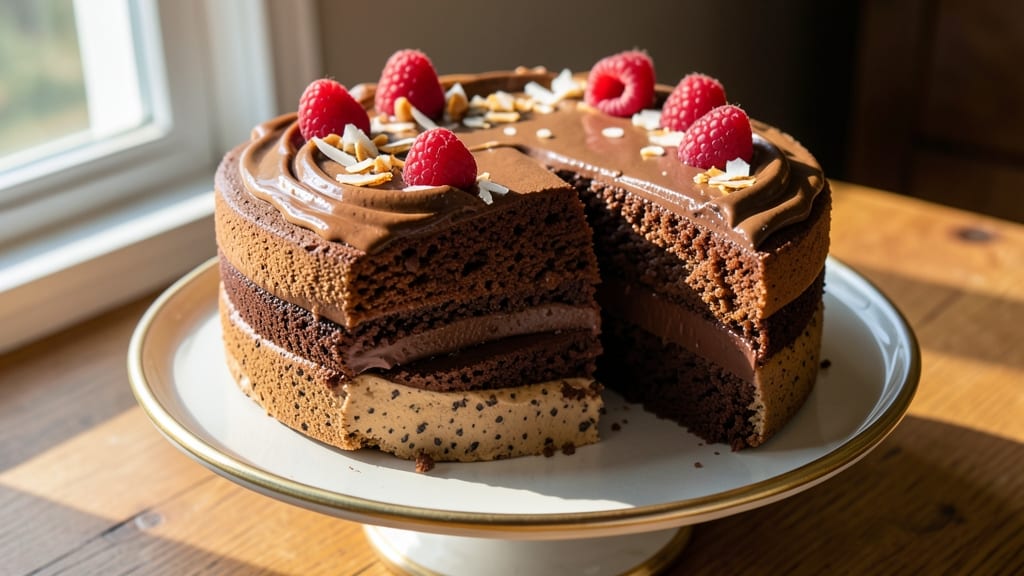
This carob chocolate cake recipe delivers all the richness of classic chocolate cake without the caffeine or dairy—perfect for those who love deep cocoa flavor but need a gentler alternative. 🌟 The secret lies in carob powder, which provides that signature chocolatey taste with natural sweetness and a hint of earthy complexity.
Unlike traditional chocolate, carob contains no caffeine, making it ideal for afternoon treats or late-night cravings.
The result is a moist, fudgy cake with a velvety crumb that stays tender for days. I’ve tested this recipe countless times to ensure it rises properly and holds its shape without being dense.
The plant-based ingredients—like flax eggs and coconut oil—keep it rich and decadent, while the carob gives it that signature chocolatey depth without overpowering.
What sets this cake apart is its versatility—enjoy it plain for a simple dessert or add a layer of vegan cream cheese frosting for extra indulgence. The flavor profile is smooth, slightly sweet, and subtly earthy, making it a crowd-pleaser for both chocolate lovers and those avoiding caffeine.
It’s the perfect balance of comfort and health-conscious baking.
Baking takes just 35 minutes at 350°F, and the ingredients are simple yet effective. Whether you’re celebrating a special occasion or just craving a treat, this cake delivers restaurant-quality results at home. Let’s get baking!
Ingredients for carob chocolate cake
Rich carob powder meets plant-based baking essentials for a decadent, caffeine-free chocolate cake.
| Ingredient | Amount | Notes |
|---|---|---|
| Carob Powder 🍫 | ¾ cup | High-quality, unsweetened preferred |
| All-Purpose Flour 🌾 | 2 cups | Sifted for light texture |
| Granulated Coconut Sugar 🍯 | 1 cup | Or refined cane sugar |
| Coconut Oil 🥥 | ¾ cup | Melted, full-fat preferred |
| Unsweetened Applesauce 🍎 | ½ cup | For moisture and fat |
| Vanilla Extract 🌿 | 1 tbsp | Pure, high-quality preferred |
| Baking Soda 🧂 | 1 tsp | Freshly measured |
| Salt 🧂 | ½ tsp | Fine sea salt preferred |
| Ground Flaxseed 🌾 | 2 tbsp | For flax eggs |
| Almond Milk 🥛 | ½ cup | Unsweetened, room temperature |
| Espresso Powder ☕ | ½ tsp | Enhances chocolate depth |
| Orange Zest 🍊 | 1 tbsp | Brightens flavor profile |
| Vanilla Bean Paste 🌿 | ½ tbsp | For enhanced vanilla flavor |
| Vegan Cream Cheese Frosting 🧀 | 1 cup | Optional for topping |
The carob powder is the heart of this recipe—NOW Foods or Bob's Red Mill brands deliver the most consistent flavor. Look for unsweetened versions to avoid added sugars that can overpower the natural sweetness. The coconut sugar adds subtle caramel notes while keeping the recipe vegan-friendly, and Trader Joe's carries a high-quality version at a reasonable price. For the flax eggs, grind the seeds fresh in a spice grinder for maximum binding power—pre-ground flaxseed works in a pinch but lacks that same cohesive texture. The orange zest might seem unusual, but it brightens the earthy carob without competing with its depth.
No carob powder? Cocoa powder with 1 tbsp extra sugar is the closest substitute, though the flavor will be more bitter and lack carob’s natural sweetness. Running low on coconut oil? Avocado oil or melted coconut butter works equally well for moisture. For the vanilla, Madagascar bourbon vanilla extract elevates the flavor, but pure vanilla will suffice. The espresso powder is optional but deepens the chocolate notes—omit if you prefer a sweeter profile. If you’re sensitive to citrus, reduce the zest to 1 teaspoon or skip it entirely. The vegan cream cheese frosting can be swapped for a cashew cream frosting for a lighter option.
Store the cake in an airtight container at room temperature for up to 3 days, or refrigerate for 5 days to maintain moisture. The frosting, if used, should be refrigerated separately and spread just before serving to prevent melting. For longer storage, wrap the cake tightly in plastic wrap and freeze for up to 3 months. Thaw at room temperature for 1-2 hours before serving. The cake’s texture improves slightly after 24 hours—this is when the flavors fully meld, so baking ahead is ideal for special occasions.
Why You'll Love This Recipe
- No Mixer Needed: I swear by this recipe when I’m too tired to crank up the stand mixer—just whisk the coconut oil and applesauce until smooth, then fold in the dry stuff. The batter’s thick but forgiving, and the carob powder dissolves like magic, no lumps in sight.
- Rich Without Guilt: That carob powder? It’s the star—deep, molasses-y, and so satisfying, but none of the caffeine jitters or blood sugar spikes. The coconut sugar adds just enough caramel notes to make it taste like a treat, not a health hack. (Yes, even my kids beg for seconds.)
- Weeknight Magic: This cake bakes in one bowl, then slides straight into the oven—no fancy layers or cooling times. I’ve served it warm with a scoop of coconut yogurt for a quick dinner, or sliced cold for breakfast with a sprinkle of cinnamon. Honestly, it’s my go-to when I need something impressive with zero effort.
- Leftovers That Last: The coconut oil keeps it moist for days, and the applesauce makes it dense enough to slice neatly. I’ve packed this in lunchboxes (it holds up like a champ) and even frozen slices for when I’m too lazy to bake. Plus, the ingredients are cheap—carob powder and coconut sugar stretch a long way. Budget win.
Step-by-step instructions for carob chocolate cake
This method delivers a rich, moist carob cake with perfect texture every time.
👨🍳 Step 1: Prepare the Flax Eggs and Mix Dry Ingredients
In a small bowl, whisk together the 2 tablespoons ground flaxseed with 0.5 cup almond milk. Let this mixture sit for 5 minutes until it thickens into a gel-like consistency—this is your flax egg substitute. The mixture should be smooth and slightly viscous, resembling raw egg whites.
In a separate large bowl, sift together the 2 cups all-purpose flour, 0.75 cup carob powder, 1 teaspoon baking soda, and 0.5 teaspoon salt. This pre-sifting step prevents lumps and ensures an even, light crumb structure. Set aside for now—we'll combine it with wet ingredients shortly.
🍳 Step 2: Combine Wet Ingredients for Perfect Texture
In a medium saucepan, gently warm the 0.5 cup unsweetened applesauce and 0.75 cup coconut oil over low heat for 2-3 minutes until the coconut oil melts completely. Remove from heat and let cool slightly—this prevents scrambling when mixed with other ingredients.
In a separate bowl, whisk together the 1 cup granulated coconut sugar, 1 tablespoon vanilla extract, 0.5 teaspoon espresso powder, 1 tablespoon orange zest, and 0.5 tablespoon vanilla bean paste. This combination creates a complex flavor profile with bright citrus notes and deep chocolate intensity. Add the cooled applesauce-coconut oil mixture and stir until fully combined.
🥘 Step 3: Assemble the Batter for Optimal Moisture
Create a well in the center of your dry ingredient mixture. Pour in the wet ingredients along with the flax egg mixture. Using a spatula, gently fold everything together just until combined—do not overmix. You want to preserve as much air as possible for a light, airy texture. The batter should be thick but pourable, with a few flour streaks visible.
Here's the thing—this batter is designed to be slightly thicker than traditional chocolate cake batter. The combination of applesauce, coconut oil, and flax eggs creates natural moisture without needing additional liquids. This ensures a dense yet tender crumb that stays moist for days.
🔥 Step 4: Bake to Perfect Doneness
Preheat your oven to 350°F and grease two 8-inch round cake pans or one 9x13-inch pan with coconut oil. Divide the batter evenly between the pans. Bake for 25-30 minutes in the round pans (or 30-35 minutes in the sheet pan) until a toothpick inserted in the center comes out clean with just a few moist crumbs clinging to it.
I like to check for doneness at the 25-minute mark—the cake should spring back slightly when pressed in the center. If the top browns too quickly, tent the pans with aluminum foil to prevent over-browning while maintaining moisture. The key is achieving an internal temperature of 210°F—this ensures perfect doneness without drying out the cake.
⏰ Step 5: Cool and Frost for Maximum Richness
Allow the cakes to cool in their pans for 10 minutes, then transfer to a wire rack to cool completely. This gradual cooling prevents cracking and helps set the cake structure. While cooling, prepare the 1 cup vegan cream cheese frosting according to package instructions—this should be thick but spreadable for easy application.
Once completely cool, level the tops of the cakes if needed, then frost generously. The frosting should create a smooth, even layer that seals in moisture. For an elegant presentation, pipe additional frosting around the edges or create decorative swirls on top. Serve immediately for the most tender texture, or refrigerate for up to 3 days for a firmer slice.
Pro Tips For Making Carob Chocolate Cake
- Whisk Carob First: Mix the carob powder with the dry flour before adding liquids—this prevents clumping and ensures even distribution. I learned this the hard way after scraping stubborn carob lumps out of my bowl.
- Melt Coconut Oil Slowly: Warm the coconut oil to 90°F (32°C) before mixing—just enough to soften it without turning it greasy. Cold oil makes the batter too thick, and hot oil can curdle the applesauce.
- Don’t Overmix the Batter: Stir just until combined; overmixing introduces air that collapses during baking, leaving a dense cake. Two minutes max with a spatula—no need to go full speed.
- Test for Doneness Early: Check at 25 minutes (instead of 30) with a toothpick—carob cakes dry out faster than chocolate ones. If it’s slightly underdone, tent with foil for the last 5 minutes.
Storing and reheating this recipe
Room-Temp Storage
Store your carob cake in an airtight container at room temperature for up to 3 days. The cake’s natural moisture from the applesauce and coconut oil keeps it tender, but refrigeration extends freshness to 5 days.
I always wrap the cake tightly in plastic wrap first, then place it in the container to lock in moisture. 🌟
Refrigerator Tips
If you’re storing the cake for more than 3 days, refrigerate it. The frosting, if used, should be refrigerated separately and spread just before serving to prevent melting.
For a firmer slice, let the cake sit at room temperature for 10-15 minutes before serving—this restores the tender crumb texture. 🧀
Freezer Magic
For longer storage, wrap the cake tightly in plastic wrap and place it in a freezer bag, squeezing out excess air to prevent freezer burn. It keeps for up to 3 months without losing moisture or flavor.
Thaw at room temperature for 1-2 hours before serving—this gradual process preserves the cake’s texture. ❄️
Reheating Secrets
If your cake feels dry after refrigeration, reheat individual slices in the microwave for 10-15 seconds on 50% power. For a stovetop method, place the slice on a dry skillet over low heat for 30 seconds per side—this restores moisture without overcooking.
Avoid the oven, as it can dry out the cake further. 🔥
Frosting Handling
If using vegan cream cheese frosting, store it separately in an airtight container in the fridge. Spread it just before serving to keep it fresh and spreadable.
For a lighter option, swap the frosting for a cashew cream frosting, which stays stable at room temperature for up to 2 days. 🎂
Flavor Boost After Storage
The cake actually tastes better after 24 hours—the flavors meld beautifully! If you’re prepping for a party, bake it a day ahead. For extra richness, dust the top with a pinch of carob powder or drizzle with melted dark chocolate (vegan) before serving.
This adds a professional touch without extra effort. ✨
Nutrition facts
Frequently asked questions
What makes carob different from regular chocolate?
Carob is naturally caffeine-free and lower in sugar than chocolate, with a sweeter, earthier flavor profile. Unlike chocolate, it contains no theobromine, making it ideal for sensitive individuals. The powder also has a slightly grainy texture that adds interesting depth to baked goods.
Can I substitute carob powder with cocoa powder?
Yes, but the flavor will differ significantly. Use 1:1 ratio of cocoa powder plus 1 tbsp extra sugar per 0.75 cup carob to mimic sweetness. The cake will taste more bitter and lack carob's natural sweetness. For best results, stick with carob powder for that signature flavor.
Why does this cake need flax eggs?
The flax eggs (ground flaxseed + almond milk) create the binding and moisture that traditional eggs provide without animal products. The gel-like consistency mimics egg whites perfectly, helping the cake rise properly while keeping it tender. This is especially important for vegan baking where egg substitutes are crucial.
What's the best way to test for doneness?
Insert a toothpick into the center—the cake is done when it comes out with just a few moist crumbs (not wet batter). For extra accuracy, check the internal temperature at 210°F. If the top browns too quickly, tent with foil to prevent over-browning while maintaining moisture.
Can I make this cake gluten-free?
Replace the all-purpose flour with a 1:1 gluten-free baking flour blend like Bob's Red Mill. You may need to add 0.5 tsp xanthan gum to improve texture. The rest of the recipe remains unchanged, and the cake will maintain its moist, tender quality.